

A foundation does not give you much room for correction. If the layout is off, the excavation is wrong, or the concrete forms move during placement, every trade that follows pays for it. That is why understanding how to build house foundations starts with one basic truth - foundation work is not just concrete in the ground. It is a sequence of structural decisions that has to be executed accurately from the first stake to the final cure.
For homeowners, that means fewer surprises later. For builders and developers, it means tighter schedules and fewer downstream adjustments. And for anyone managing a project in a wet climate or variable soil conditions, it means treating the foundation as a technical scope, not a rough-start package.
How to Build House Foundations: Start With Site and Soil
Before forms are set or concrete is ordered, the site has to be evaluated properly. Soil bearing capacity, groundwater conditions, slope, frost depth, and lot access all affect foundation design and construction sequence. A flat, dry lot with stable native soil behaves very differently from a site with fill, clay, or high seasonal moisture.
This is where engineering and site prep matter. The foundation type, footing size, wall thickness, reinforcement schedule, and drainage details should follow approved plans and local code requirements. In many cases, the best path is straightforward. In others, conditions call for over-excavation, imported structural fill, stepped footings, or additional reinforcement. There is no benefit in forcing a standard approach onto a site that clearly needs something more specific.
Excavation should bring the site to the right subgrade elevation without disturbing bearing soil more than necessary. If the bottom of excavation is soft, wet, or uneven, that issue needs to be corrected before anything else continues. Good foundation work starts with stable support. Concrete cannot compensate for poor ground preparation.
Choosing the Right Foundation System
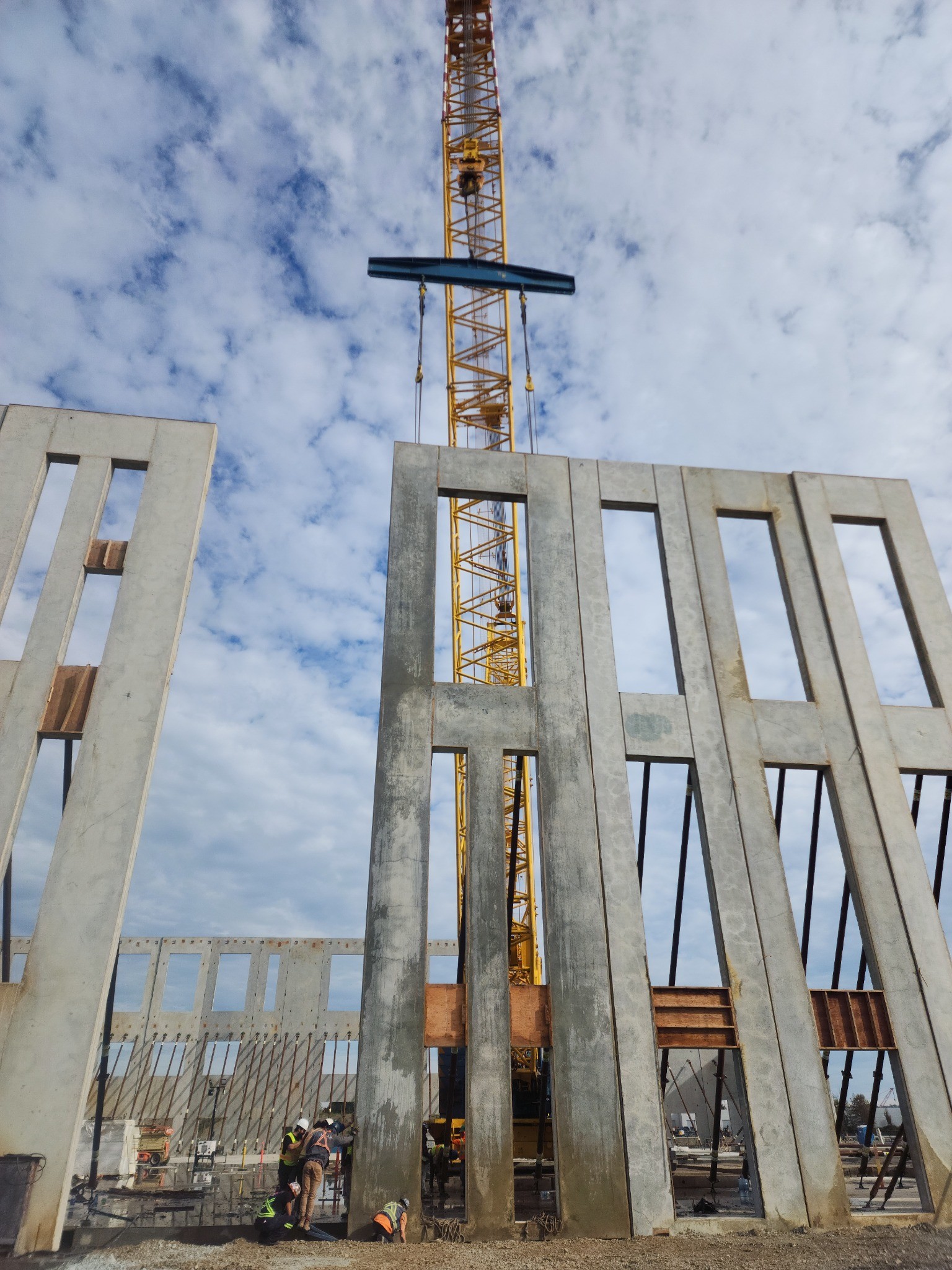
When people ask how to build house foundations, they often picture a standard poured concrete basement. That is common, but it is not the only option. The right system depends on the building design, geotechnical conditions, local requirements, and intended use of the space.
A full basement foundation provides usable lower-level space and strong perimeter support, but it requires deeper excavation, more wall forming, and a more involved waterproofing and drainage plan. A crawl space foundation reduces excavation depth and concrete volume, though it still needs proper footing support, access planning, ventilation or conditioning strategy, and moisture control. A slab-on-grade foundation can be efficient for certain house designs and site conditions, but it demands careful base preparation, insulation planning where required, and precise utility coordination before the slab is placed.
None of these options is automatically better. The best choice is the one that fits the structure, site, and budget without creating avoidable risk later.
Layout Accuracy Comes First
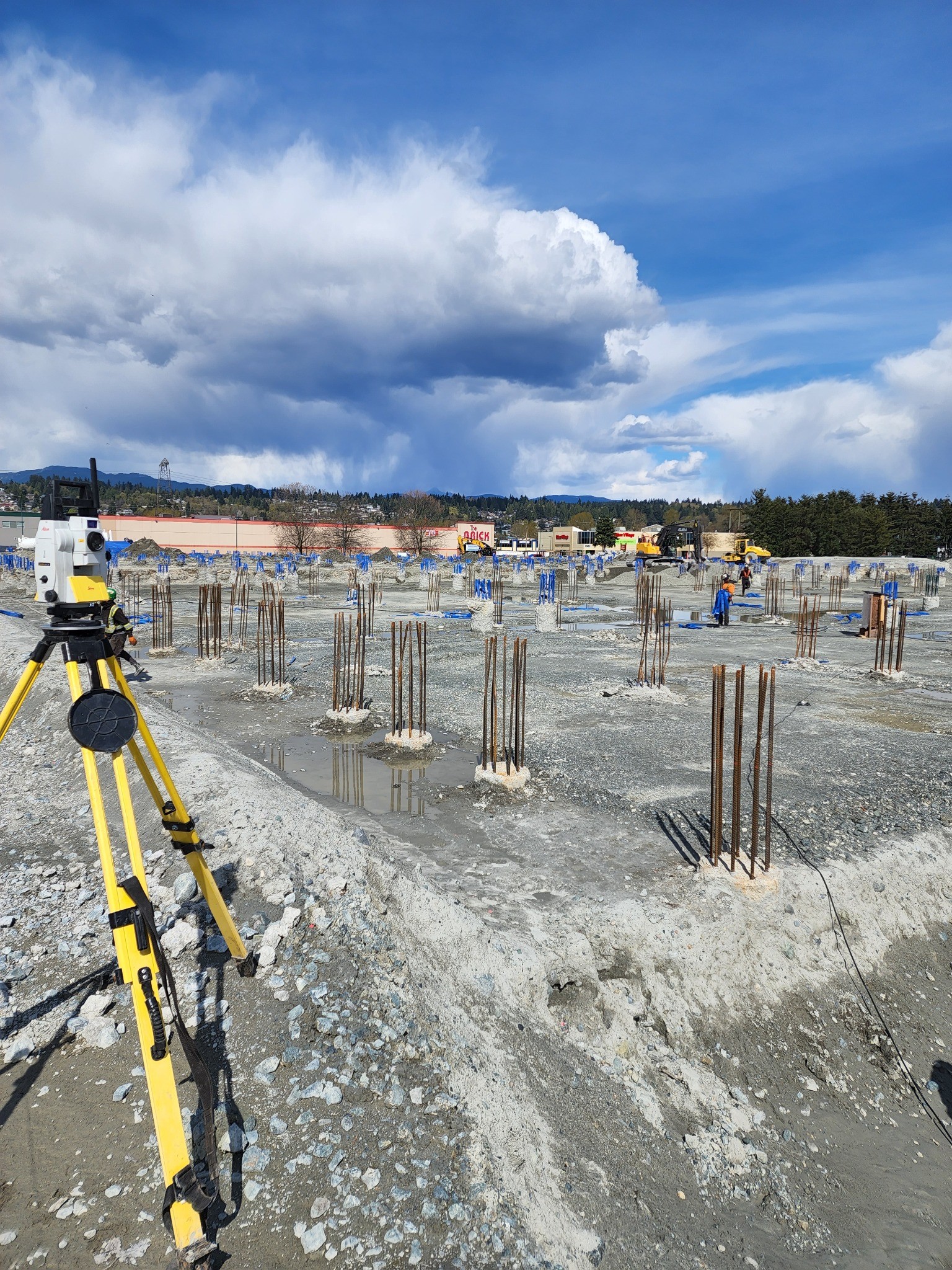
A foundation has to match the building plans exactly. That sounds obvious, but layout errors are one of the fastest ways to create expensive problems. Control lines, offsets, elevations, and dimensions all need to be established clearly before excavation and checked again before forming.
Even a small discrepancy can affect framing alignment, steel placement, stair openings, window wells, or slab elevations. On a residential build, that may lead to field fixes and added labor. On a larger commercial or multi-unit project, it can create compounding issues across multiple scopes.
Professional crews treat layout as a precision task. Measurements should be verified against plans, benchmark elevations should be protected, and any conflict between drawing intent and site conditions should be resolved before concrete is placed.
Forming Footings and Foundation Walls
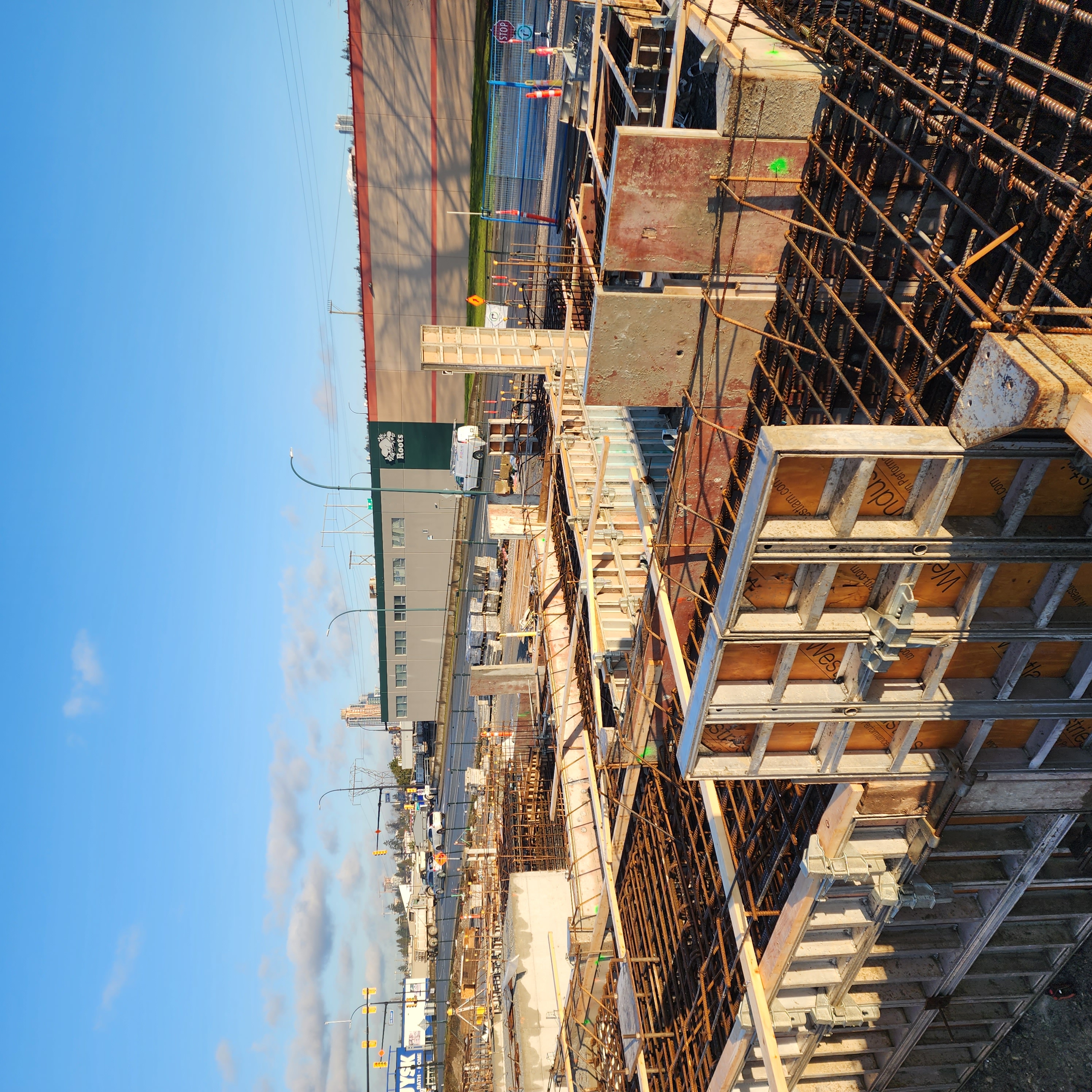
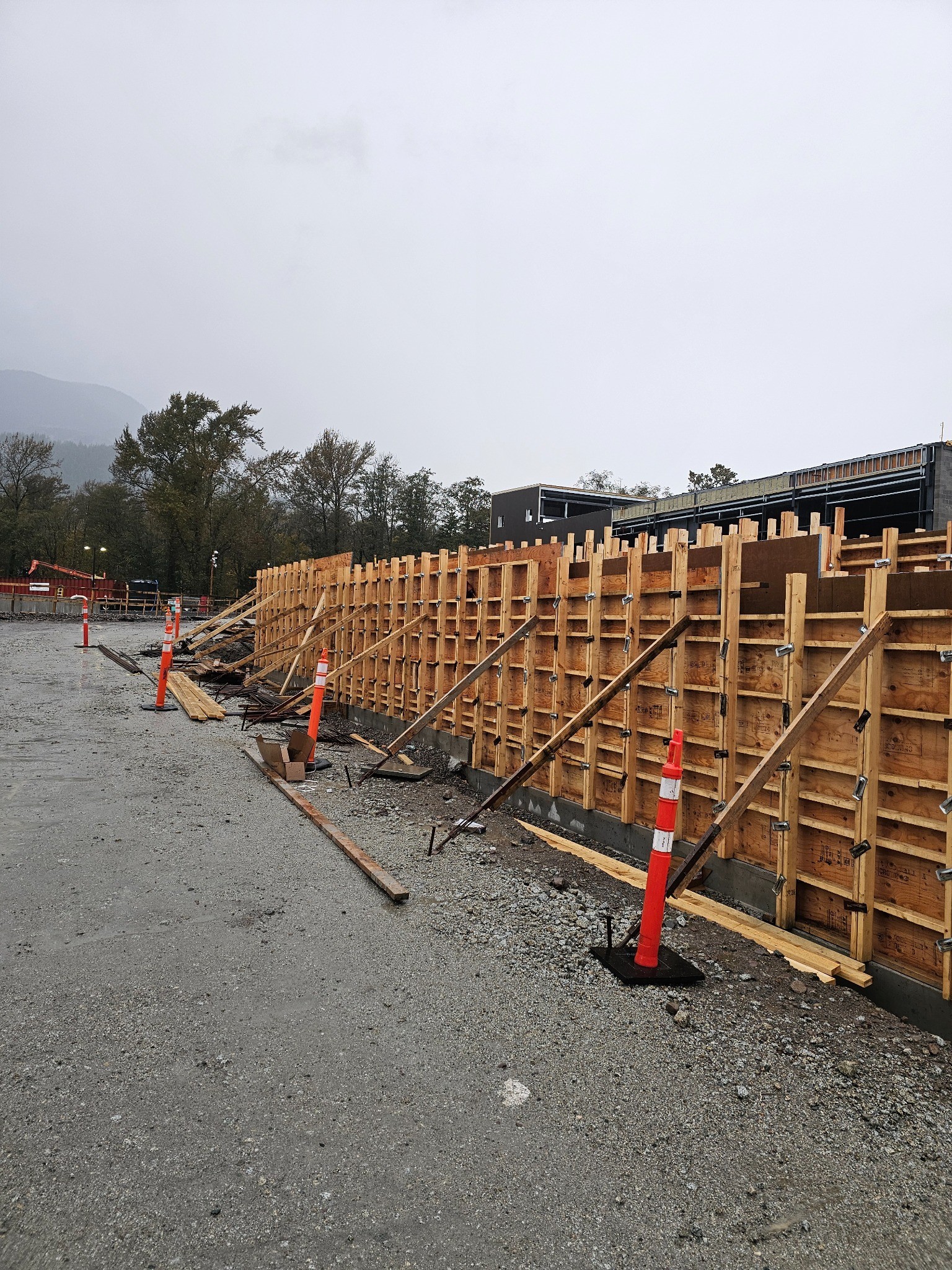
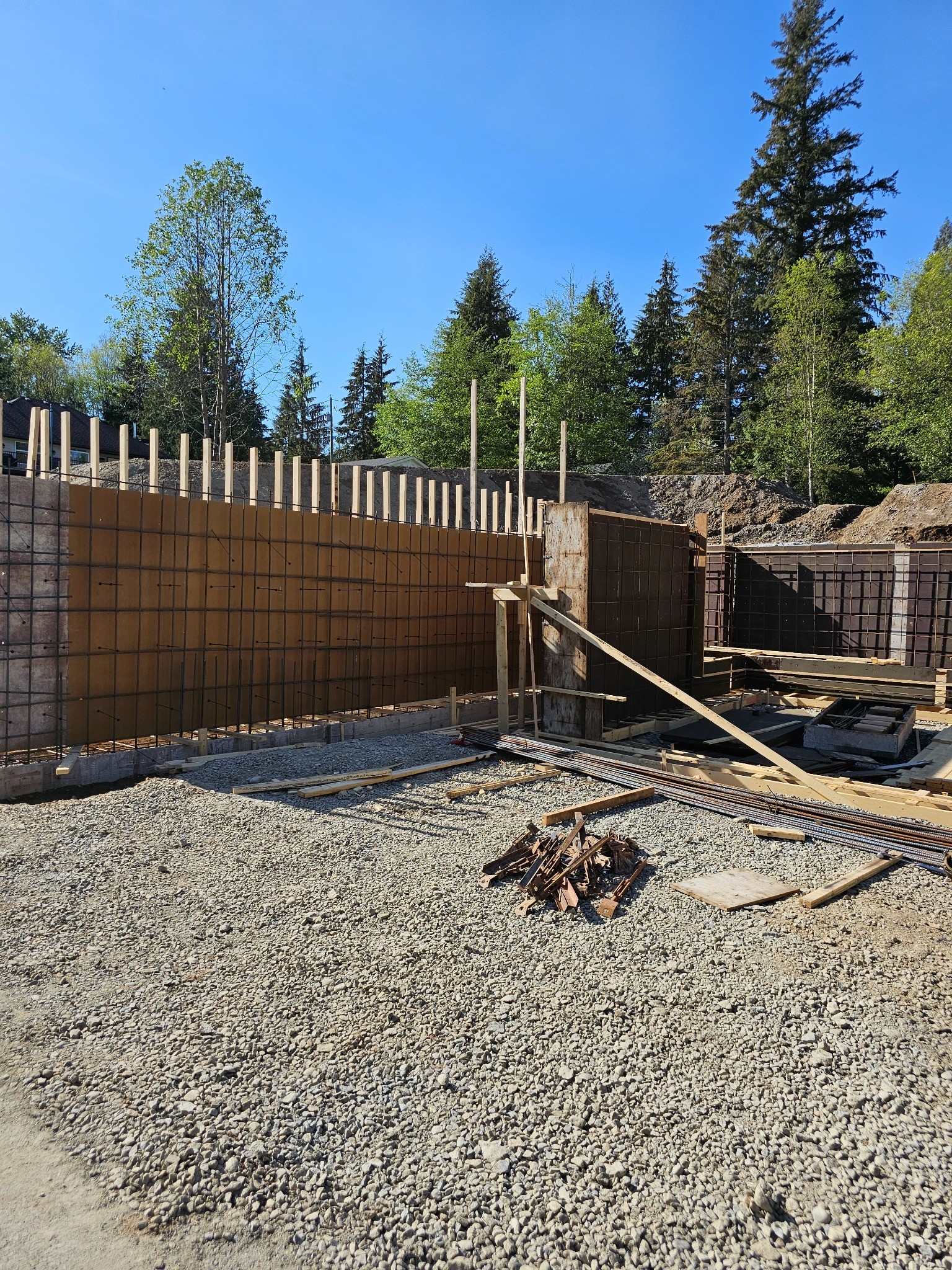
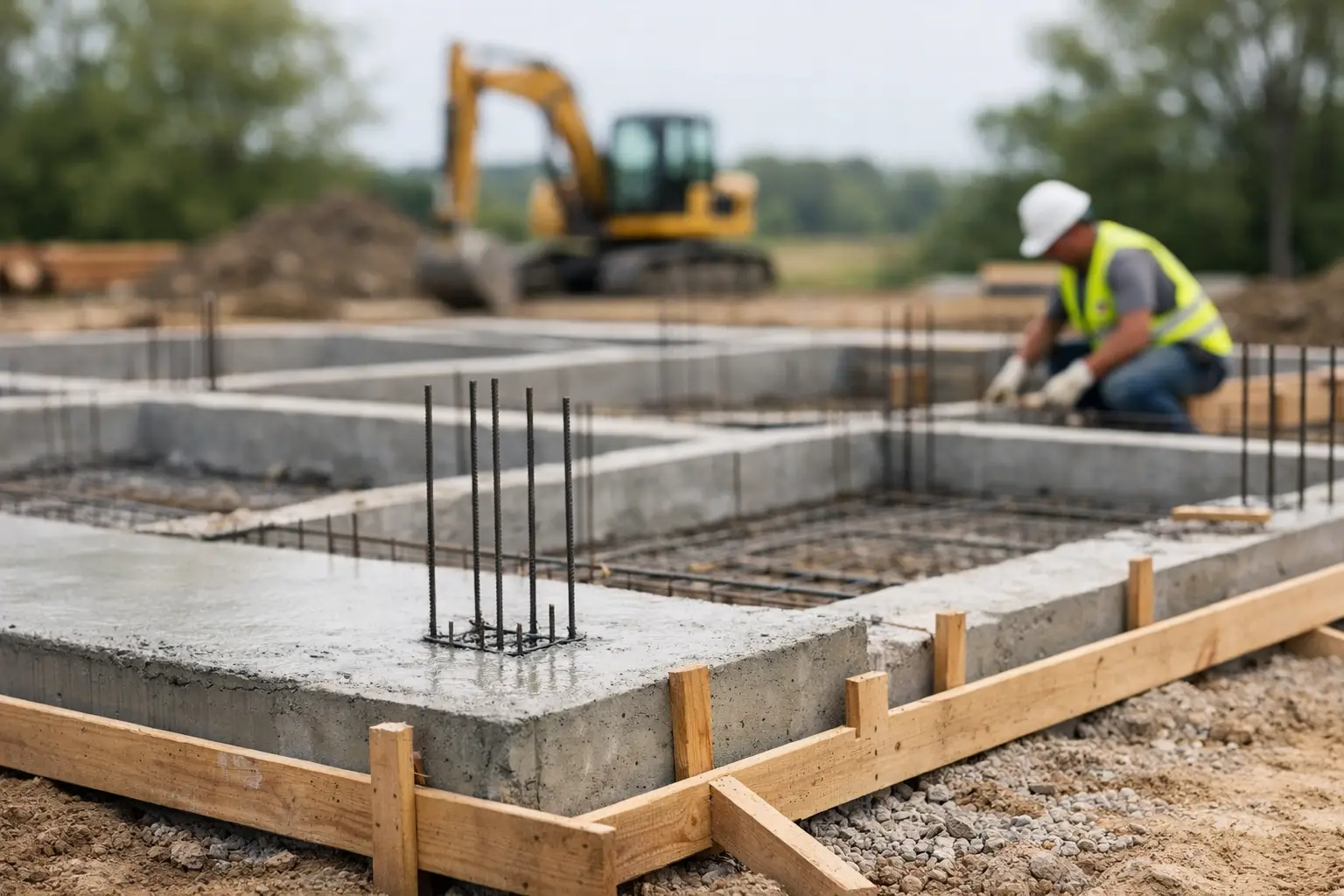
Concrete forming is where the foundation takes shape, and it is one of the most critical stages in the process. Footing forms must be straight, properly braced, and set to exact dimensions and elevation. Foundation wall forms must be aligned, secured against movement, and built to handle the pressure of wet concrete during the pour.
This is not just about appearance. Formwork controls wall thickness, corner accuracy, embed locations, and structural geometry. If forms bow, shift, or leak, the finished concrete may not meet tolerances. That can affect load transfer, waterproofing application, framing alignment, and final inspection.
Openings for doors, windows, service penetrations, and beam pockets need to be coordinated in advance. Anchor bolts, hold-downs, and embedded hardware also need to be placed accurately. Once the concrete is in, changes become slower and more expensive.
For contractors who prioritize build quality, this is where skilled execution shows. Companies such as Keystone Construction Ltd. focus on this phase because precision in forming directly affects the strength, fit, and reliability of the finished structure.
Reinforcement, Drainage, and Moisture Protection
Concrete is strong in compression, but reinforcement is what helps it handle tension, movement, and loading conditions over time. Rebar placement has to match engineered drawings for size, spacing, cover, and lap requirements. If reinforcement is misplaced or unsupported, the wall or footing may not perform as intended.
At the same time, drainage and moisture protection need to be treated as part of the structural scope, not an afterthought. Most house foundations require perimeter drain systems, free-draining backfill in the right areas, damp-proofing or waterproofing on exterior walls, and a base strategy that moves water away from the structure.
This matters even more in regions with frequent rain, changing groundwater conditions, or heavier soils. A strong concrete wall is still vulnerable if hydrostatic pressure builds against it year after year. The foundation has to resist both structural loads and environmental exposure.
Pouring Concrete Without Compromising the Work
The pour itself is where planning gets tested. Concrete mix design, weather conditions, access, crew coordination, and placement rate all affect the outcome. If the pour is rushed or uneven, forms can be stressed, finishes can suffer, and cold joints or honeycombing can become a concern.
Footings and walls should be placed in a controlled sequence, with proper consolidation to remove trapped air and ensure the concrete fully surrounds reinforcement and fills the forms. Over-vibration can create problems, but under-vibration can leave voids. This is one of those areas where experience matters because the right technique depends on wall height, reinforcement density, form configuration, and mix behavior.
Weather also changes the equation. Hot conditions can accelerate set time and affect finishing windows. Cold weather can slow strength gain and trigger protection requirements. Rain introduces its own challenges for excavation stability, base condition, and scheduling. Good foundation crews plan for these variables instead of reacting to them after the truck arrives.
Curing, Stripping, and Backfilling
Fresh concrete needs time and protection to develop strength properly. That means curing is not optional, and stripping forms too early is a mistake. The schedule should reflect actual strength development, site temperature, and structural requirements rather than simple convenience.
Once forms are removed, the foundation should be inspected for alignment, surface quality, honeycombing, anchor placement, and any required patching. Waterproofing or damp-proofing should be completed before backfill, along with drainage board or protection materials if specified.
Backfilling also needs discipline. Pushing heavy fill against a green wall too early can damage the foundation or create movement. Material type, lift thickness, moisture condition, and equipment size all matter. The safest approach is a controlled backfill sequence that respects the strength of the wall and the drainage plan around it.
Common Problems and Why They Happen
Most foundation failures are not caused by one dramatic mistake. They come from smaller errors that were allowed to pass. Poor subgrade prep, inaccurate layout, weak form bracing, missing reinforcement support, rushed waterproofing, and careless backfill all create conditions for cracking, settlement, leakage, or dimensional problems.
Some cracking is normal in concrete, and not every crack signals structural failure. But the location, width, pattern, and cause matter. Shrinkage cracks differ from settlement cracks. Surface blemishes differ from voids that affect durability. The right response depends on what actually happened, not on guesswork.
That is why a dependable foundation build is less about speed and more about control. Good crews do not just place concrete. They manage tolerances, sequence, and site conditions from start to finish.
What Owners and Builders Should Expect
If you are hiring out foundation work, ask practical questions. Who is responsible for layout verification? How will forms be braced and checked? What is the plan for drainage and waterproofing? When will backfill happen, and under what conditions? Clear answers usually point to a contractor who understands the scope in detail.
You should also expect realistic communication about trade-offs. Some sites need more excavation. Some schedules need weather allowances. Some budgets need to account for engineering-driven changes. That is normal. What matters is whether those issues are identified early and handled correctly.
A house foundation is not the place to chase shortcuts. It carries the load, sets the building lines, and supports every finish, wall, and floor above it. Build it with precision, and the rest of the project has a solid start. Build it carelessly, and the costs keep showing up long after the concrete hardens.
The best foundation work is often the least noticed later, and that is exactly the point.