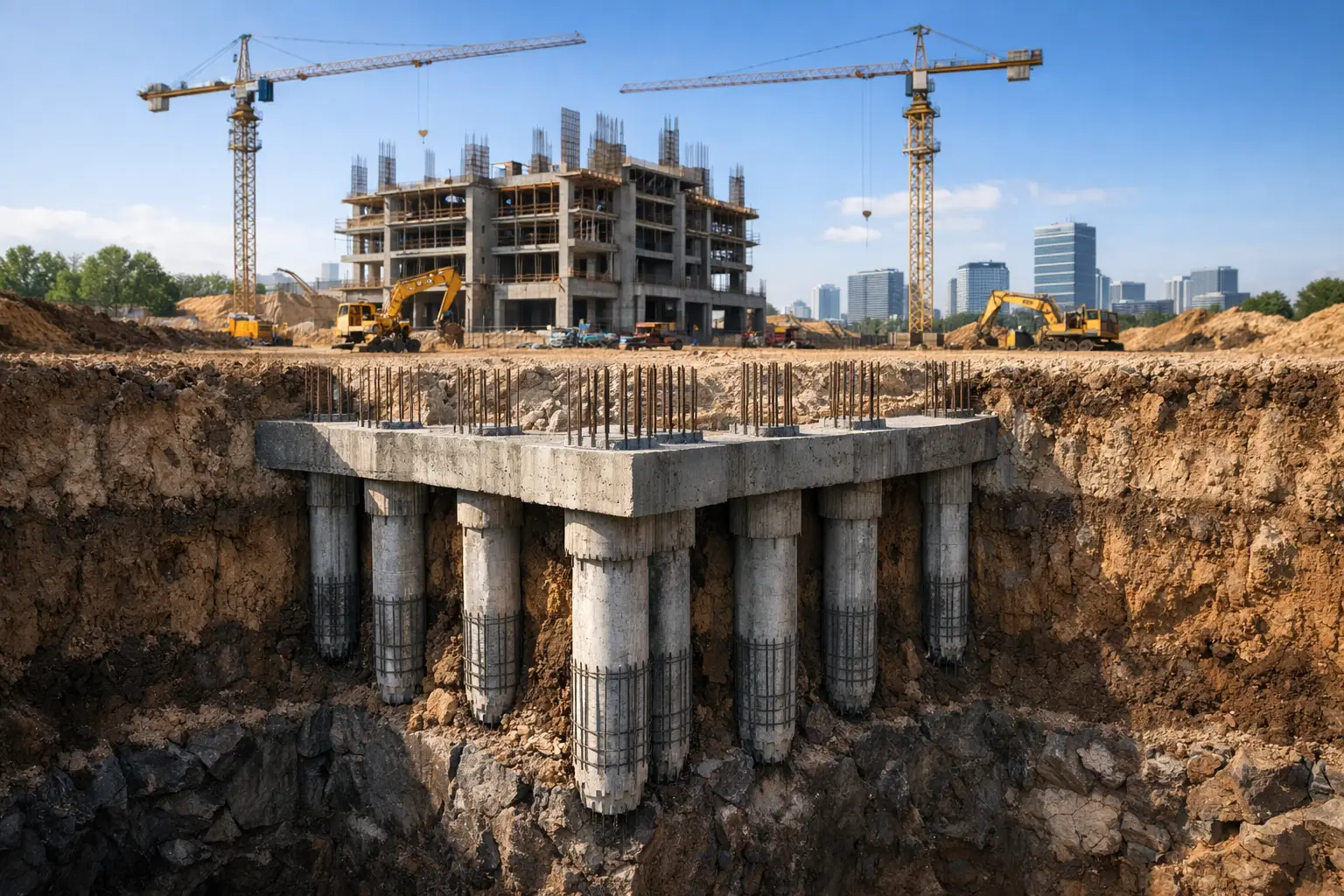
If you are asking how deep are building foundations, the honest answer is that there is no single standard depth. A house, warehouse, retaining wall, and multi-story commercial structure do not start from the same point. Foundation depth is determined by soil conditions, frost depth, structural loads, groundwater, site grading, and local code requirements. Get any of those wrong, and the rest of the build starts at a disadvantage.
That is why foundation work is not just about pouring concrete. The forming, layout, excavation depth, reinforcement placement, and bearing conditions all have to work together. A foundation has one job above all else - transfer building loads safely into the ground without excessive settlement, movement, or cracking.
How Deep Are Building Foundations in Practice?
In practice, many light residential foundations are placed several feet below grade, but that does not mean every foundation should be treated the same. A shallow footing for a detached garage is different from a full basement foundation. A commercial slab-on-grade building may use spread footings at one depth, while column pads and elevator pits go much deeper.
For many projects, the key threshold is getting below frost depth and onto suitable bearing soil. In colder climates, that minimum depth matters because water in soil expands when it freezes. If a footing sits too high, frost heave can lift sections of the structure and create movement that shows up later as cracking, uneven floors, or wall distress.
Depth also changes with loading. A lightly loaded one-story structure may perform well on relatively shallow footings if soil conditions are favorable. A heavier structure with concentrated column loads often needs wider and sometimes deeper foundations to spread those forces properly.
What Determines Foundation Depth?
Foundation depth is a structural and site-driven decision, not a guess. Several factors control it.
Soil Type and Bearing Capacity
Soil is usually the first issue to resolve. Dense gravel and well-compacted granular soil can support loads very differently than soft clay, fill, peat, or loose silty material. If the upper layer of soil is weak or inconsistent, excavation may need to continue until competent bearing is reached.
This is one of the biggest reasons there is no universal answer to how deep are building foundations. Two neighboring sites can have different subsurface conditions. One lot may support standard footings near the expected depth, while the next may require over-excavation, engineered fill, or a redesigned footing system.
Frost Depth
Footings need to bear below the local frost line unless the design uses a frost-protected system approved by code. In regions where freeze-thaw cycles are a real concern, this is not optional detail work. It is basic protection against movement.
For owners and builders, this matters because the visible building may look fine on day one even if the footings are too shallow. Problems tend to show up later, after seasonal movement has already started stressing the structure.
Building Loads
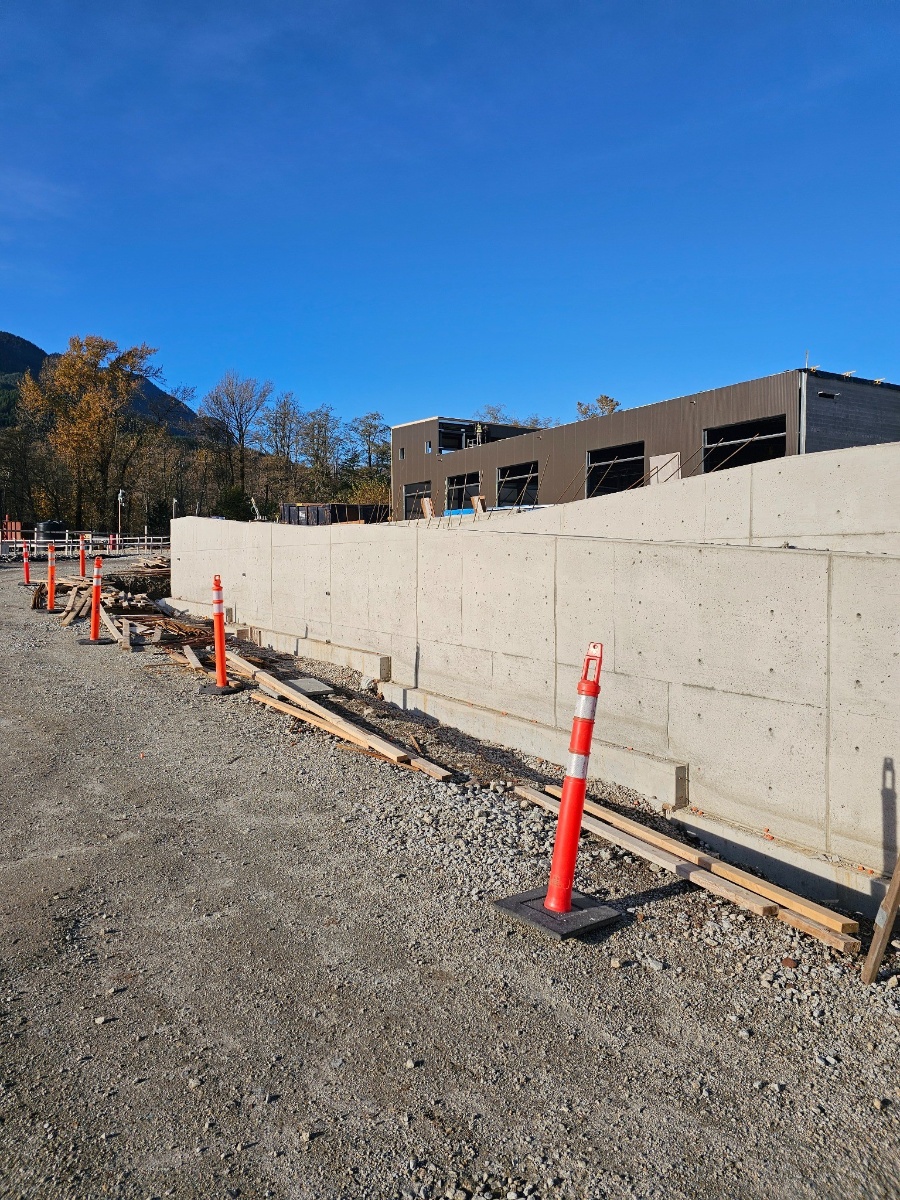
The size, height, and use of the structure affect the required depth. A small residential addition does not place the same demand on the ground as a commercial building with heavy point loads, equipment pads, or reinforced walls retaining soil.
As loads increase, footing design changes. Sometimes that means a wider footing at a similar depth. Other times it means stepping footings, adding thickened sections, or moving deeper to reach stronger support conditions.
Water Table and Drainage
Groundwater complicates foundation construction quickly. High water tables can affect excavation stability, bearing conditions, waterproofing requirements, and the quality of the concrete placement if the work is not managed correctly.
Poor drainage around a foundation also changes long-term performance. Even if the footing depth is technically correct, water pressure and saturated soils can increase settlement risk or create wall loading that needs to be addressed in both design and forming.
Site Topography
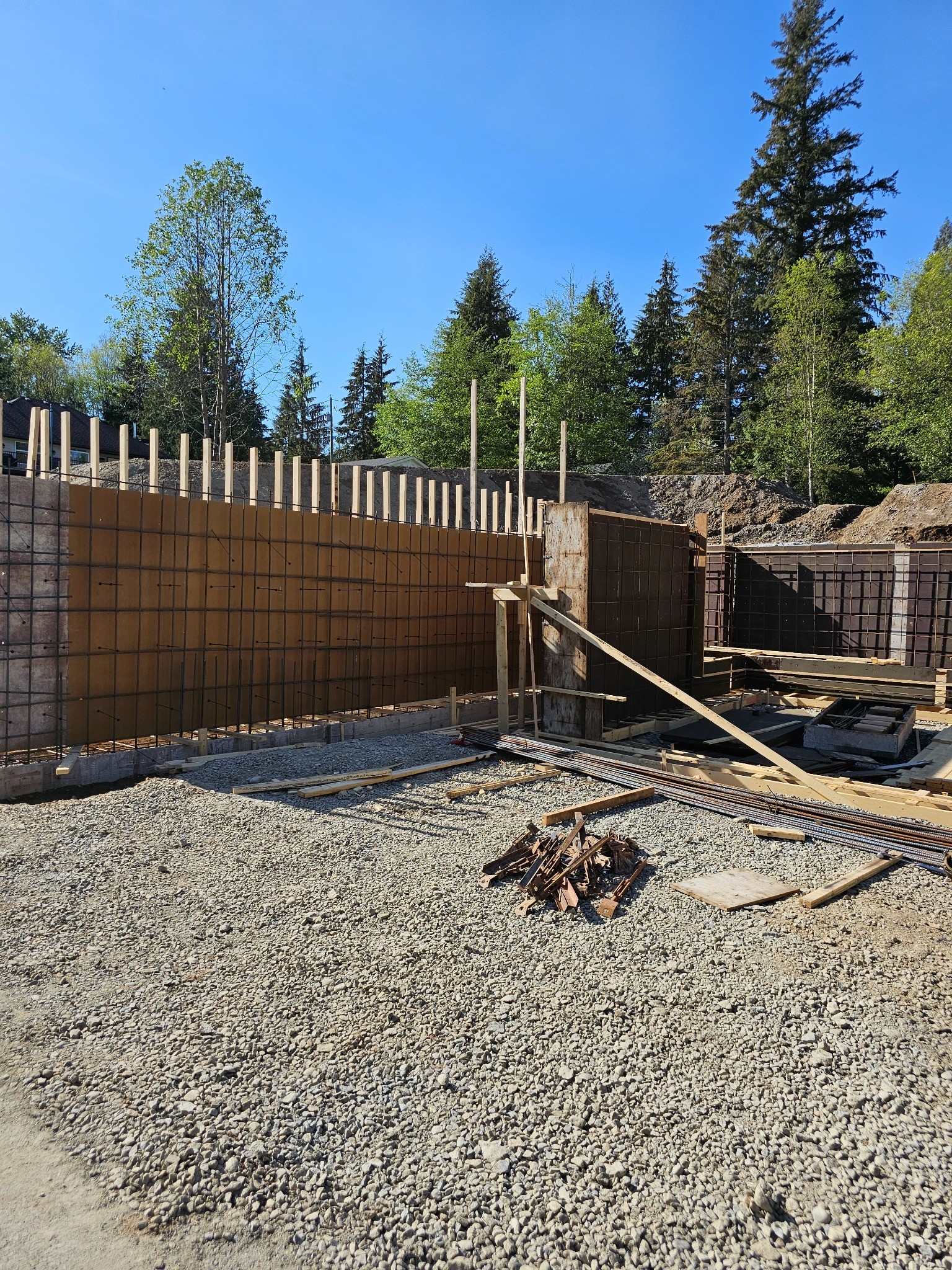
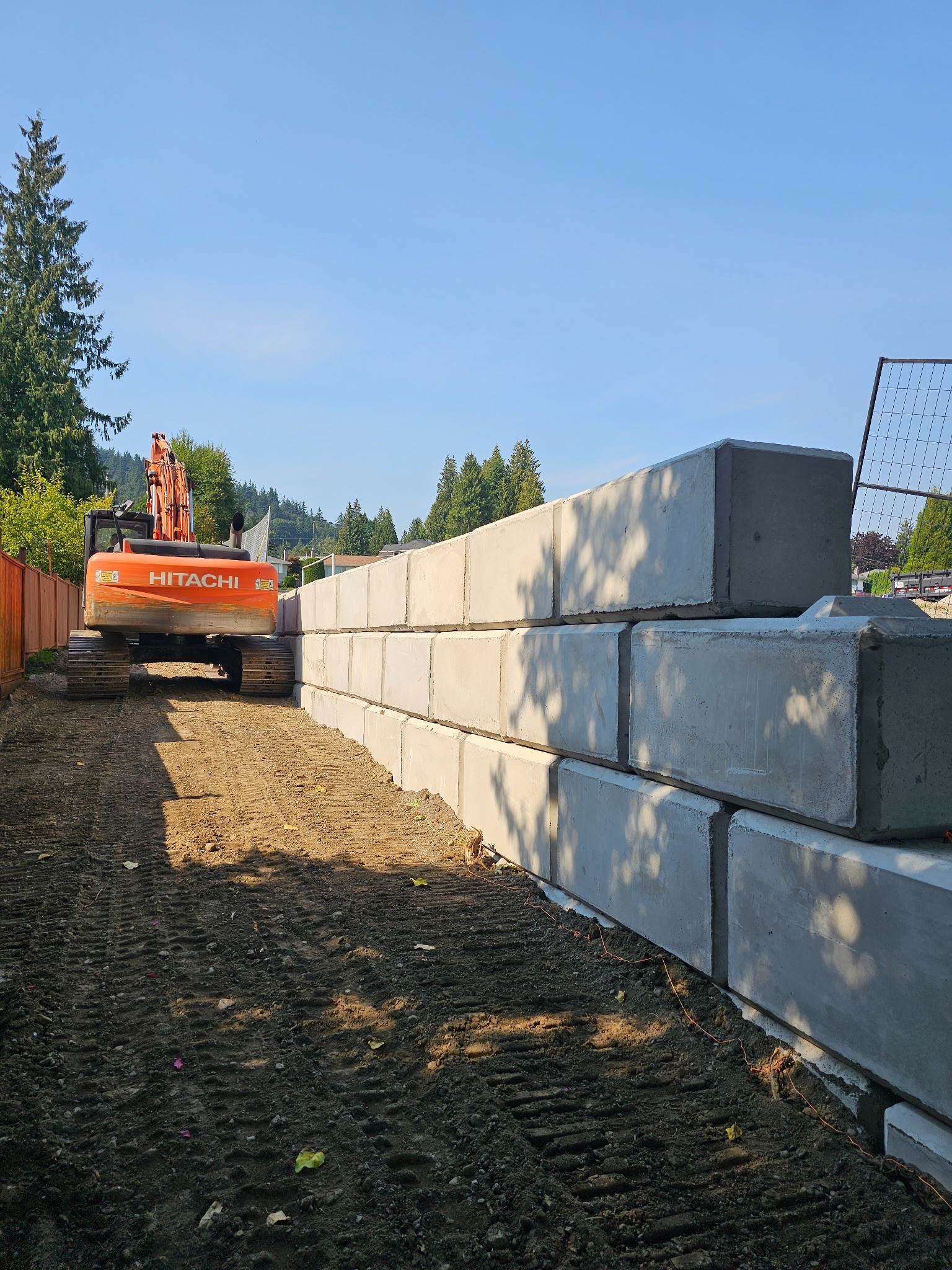
Sloped sites often require stepped footings, retaining elements, or grade changes that affect how deep parts of the foundation need to be. On flat lots, the excavation may be more uniform. On sloped properties, one side of the structure can be significantly deeper than another.
This is common in residential and commercial projects where grade transitions are part of the site plan. The foundation depth is then tied not only to structural load and frost protection, but also to retaining height and elevation control.
Shallow vs. Deep Foundations
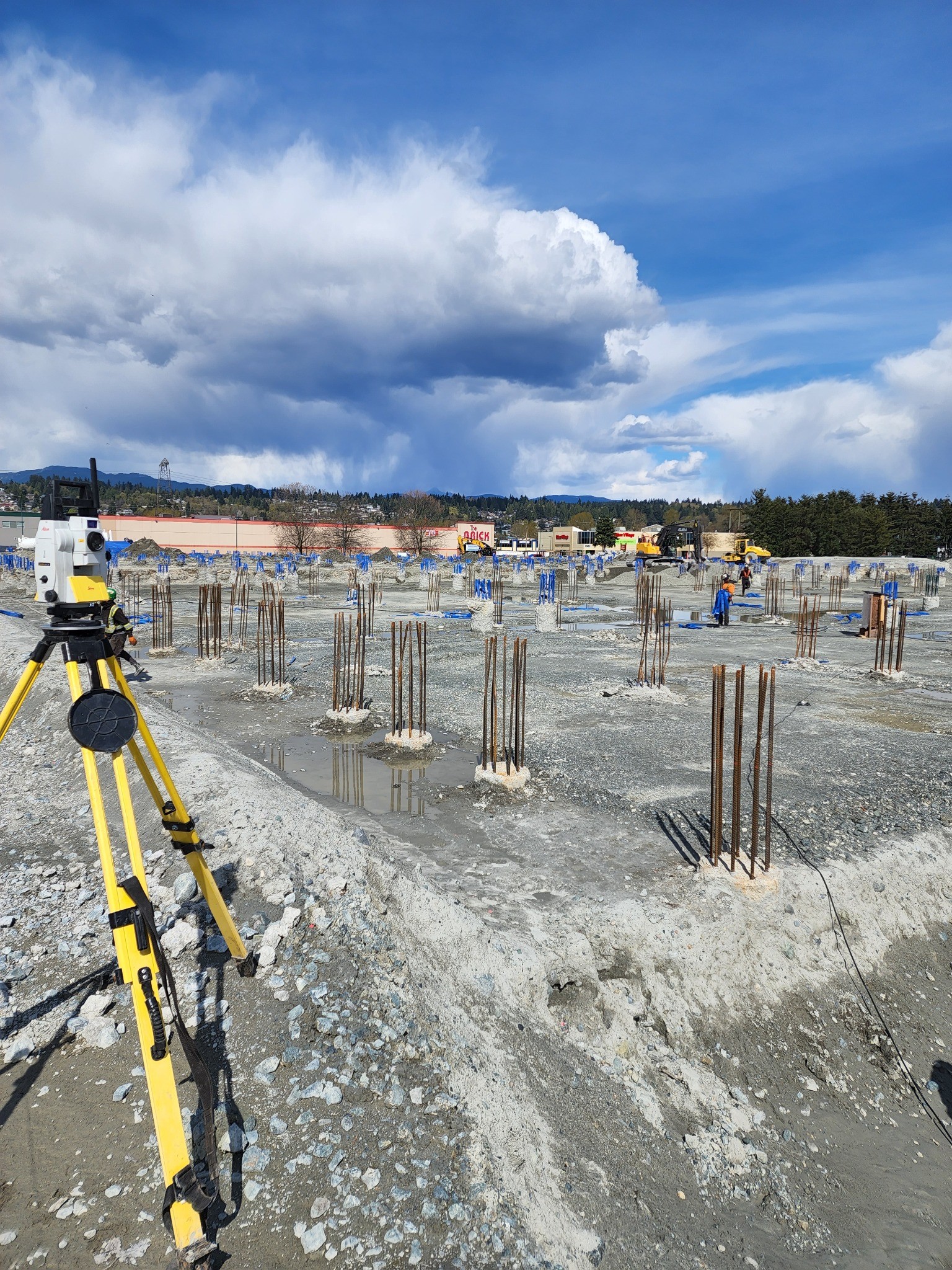
Most low-rise residential and light commercial buildings use shallow foundations. These typically include strip footings, spread footings, and foundation walls that transfer load near the surface onto competent soil. They are called shallow not because they are minimal, but because their depth is small relative to the structure they support.
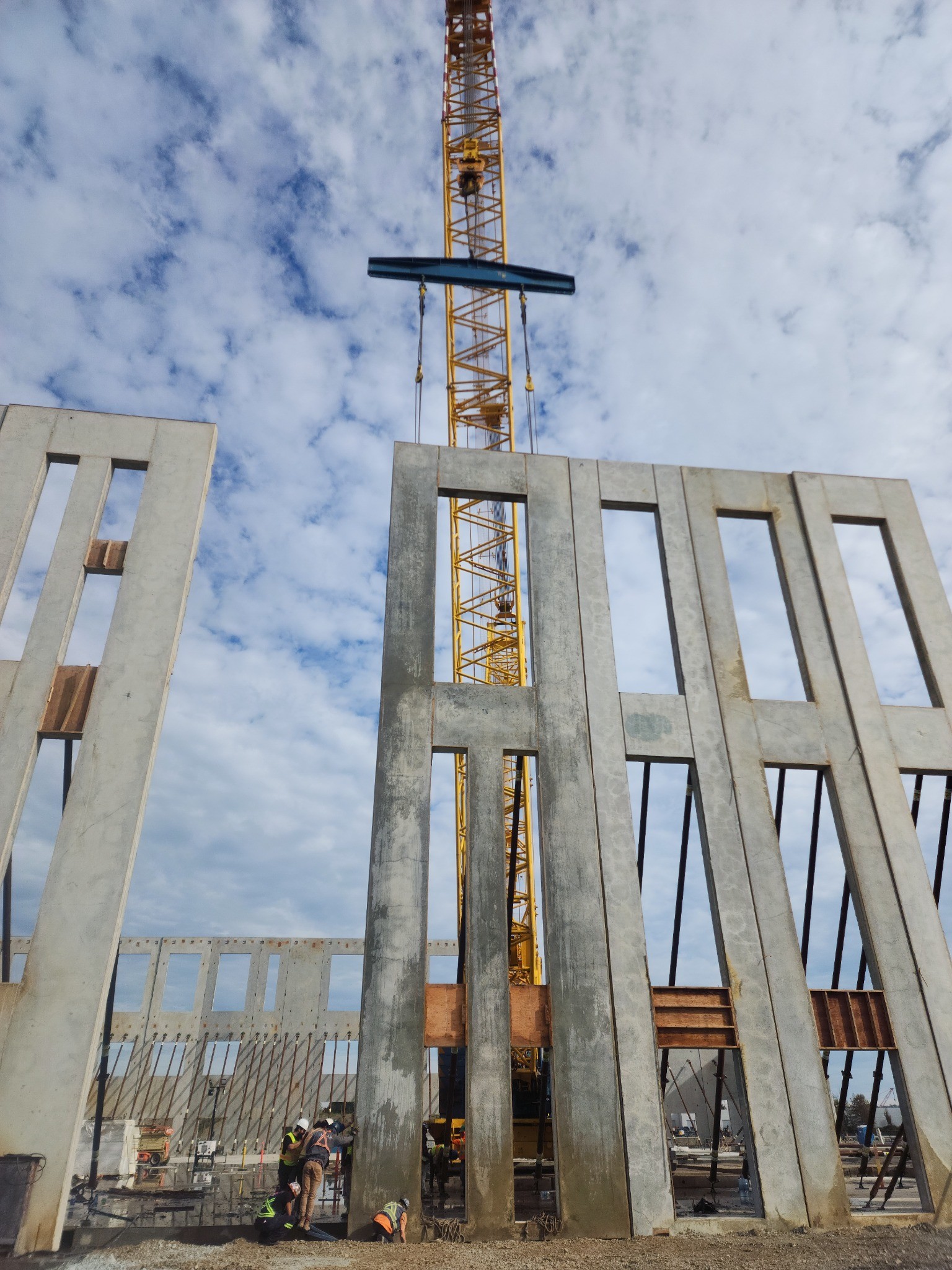
Deep foundations are a different category. These include systems such as piles, drilled shafts, and caissons that transfer loads far below the surface when upper soils are not adequate. They are more common in larger commercial, industrial, or specialized structural conditions where surface bearing is unreliable or loads are too high for shallow spread footings.
The trade-off is straightforward. Shallow foundations are often more economical when soil and site conditions allow. Deep foundations solve problems that shallow systems cannot, but they come with more complexity, equipment, engineering, and cost.
Typical Depths by Project Type
For a small shed or lightly loaded detached structure, foundations may be relatively shallow if allowed by code and site conditions. For standard residential construction, footings are commonly installed below frost depth, with additional depth depending on whether the project includes a crawl space, full basement, or stepped grade conditions.
A home with a basement is obviously deeper because the foundation wall extends to create usable space below grade. In that case, the footing sits below the basement slab elevation and still needs proper bearing support. A slab-on-grade home or commercial building may have perimeter and interior thickened sections that are shallower overall than a basement build, but still deep enough to satisfy frost and structural requirements.
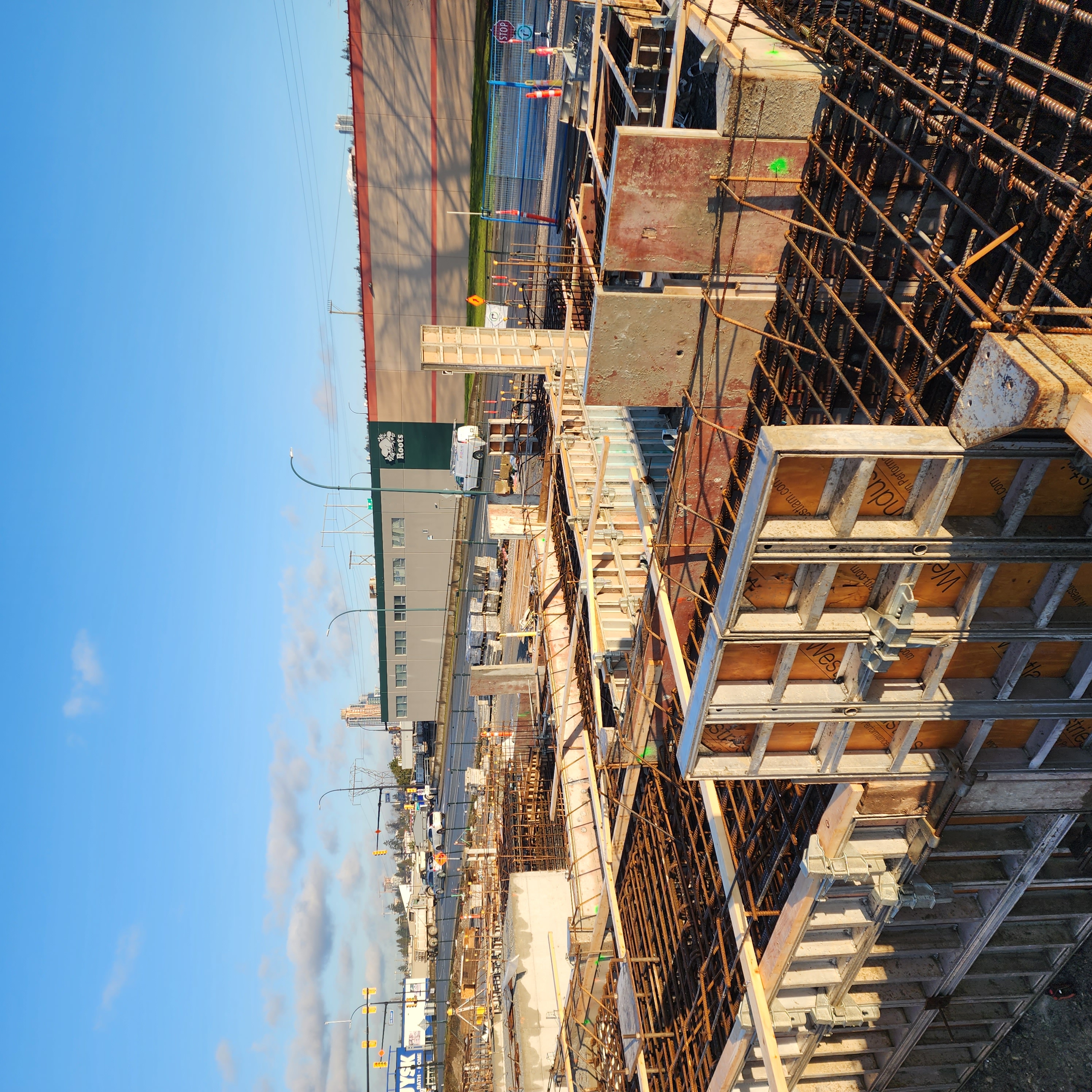
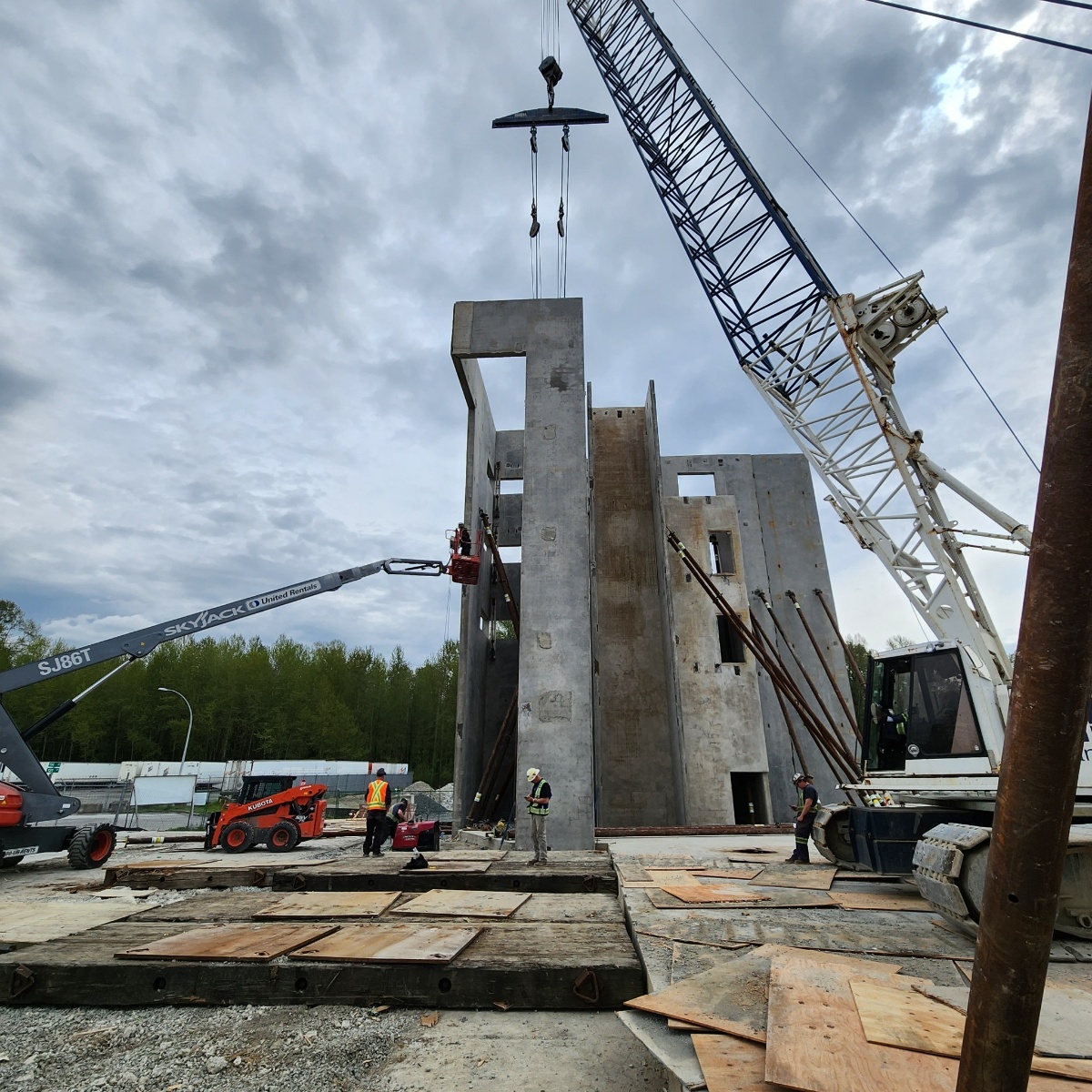
Commercial and industrial work varies more widely. Column loads, equipment loads, retaining conditions, and service penetrations can all push foundation elements deeper than a typical residential layout. There is often more variation within the same project as well, with some sections using standard spread footings while others require deeper pits, pads, or grade beams.
Why Precision in Forming Matters
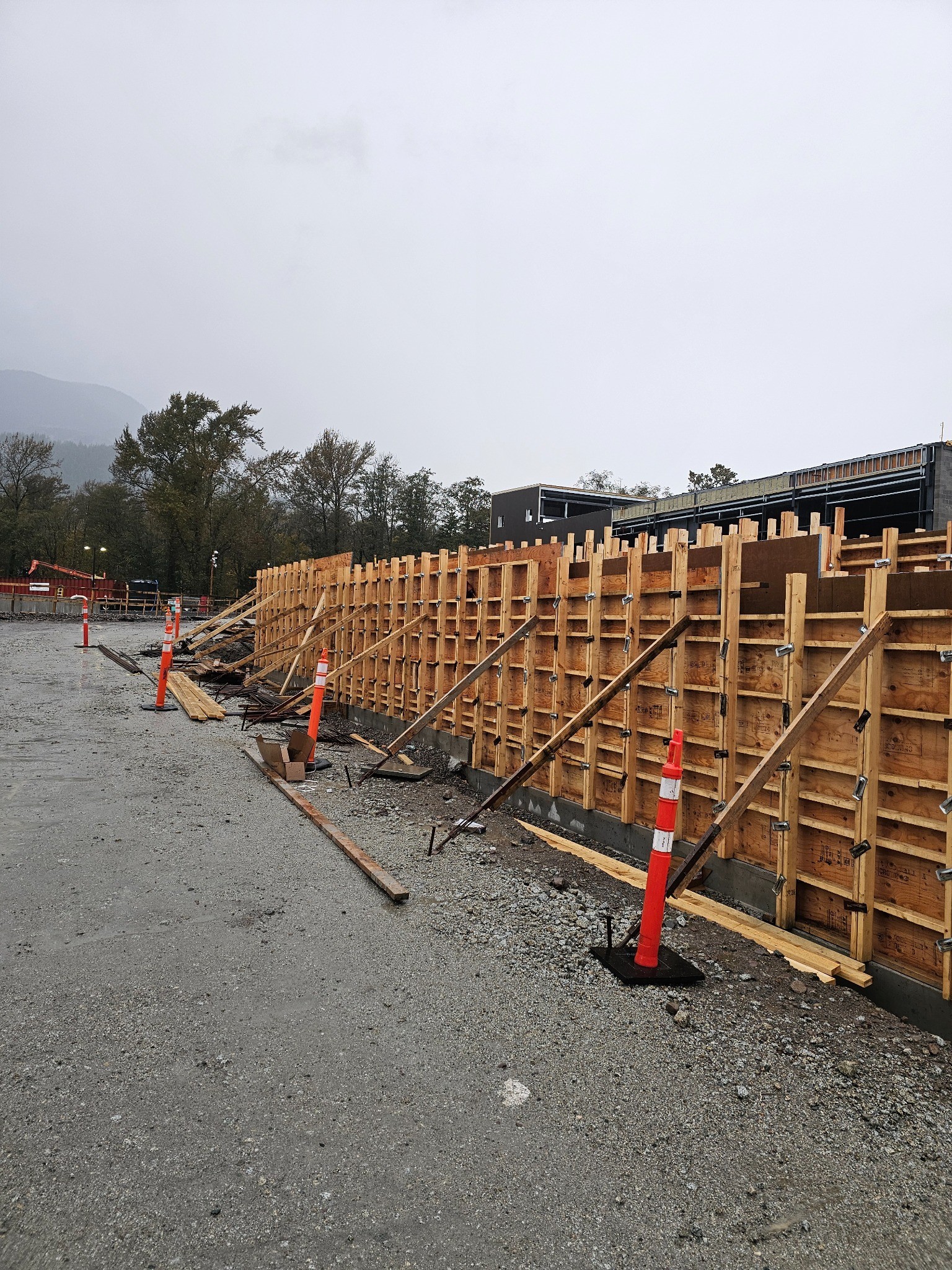
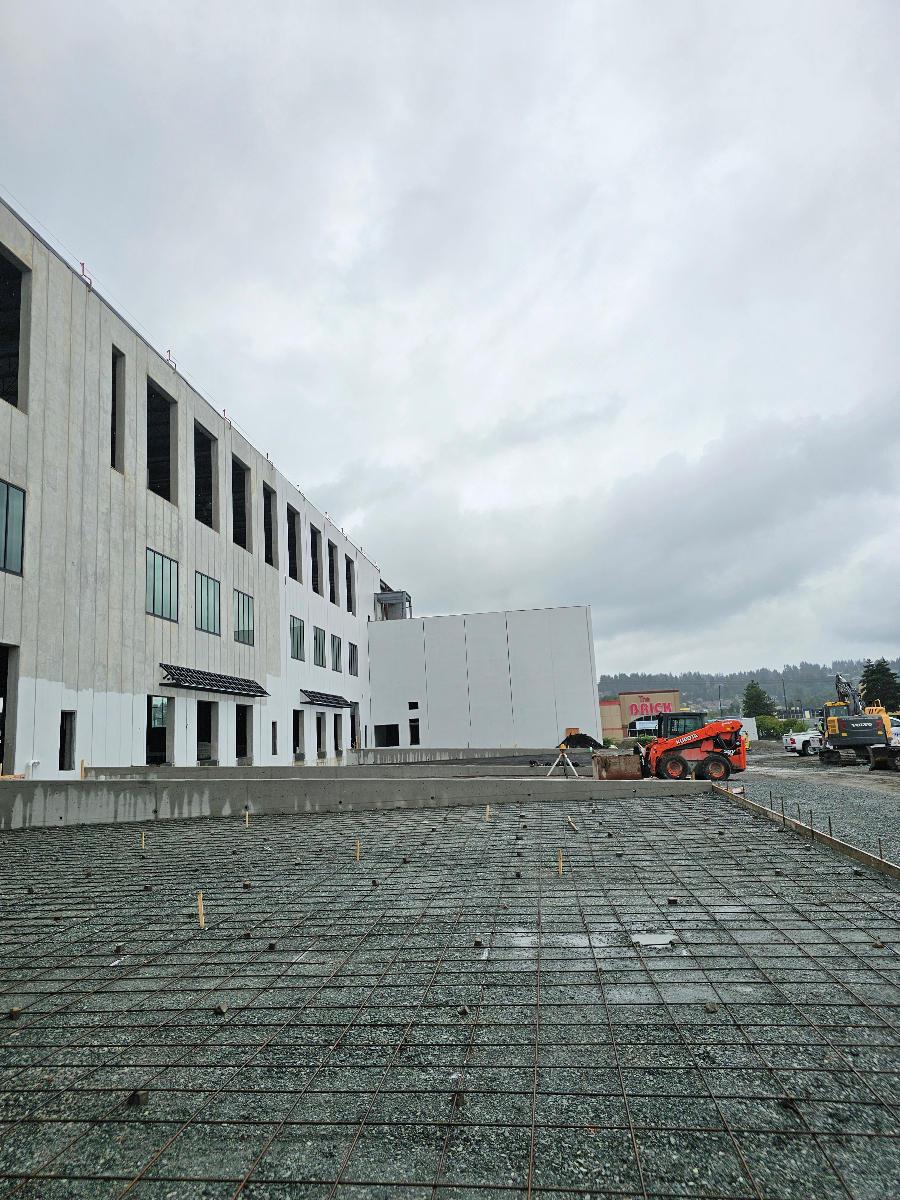
Depth on paper is only part of the job. Execution is what turns design intent into structural performance. Footings need to be formed at the correct elevation, aligned properly, sized accurately, and supported on undisturbed or approved bearing surfaces.
A foundation that is supposed to be 4 feet deep but is excavated onto disturbed soil, poured out of level, or formed inconsistently is not equivalent to a properly built one. Even small errors in footing width, step locations, wall alignment, or embedment can create downstream issues for framing, waterproofing, slab work, and load transfer.
That is where specialist concrete forming matters. Precision in layout and formwork directly affects structural accuracy. At Keystone Construction Ltd., that focus is central to foundation work across residential, commercial, and industrial projects.
Code, Engineering, and Site Review
No responsible contractor should give a universal depth without reference to code and site conditions. Local building requirements set minimum standards, but engineered drawings, geotechnical recommendations, and municipal approvals often govern the actual foundation design.
For simple projects, prescriptive code may define footing depth and size clearly. For more complex structures, engineered design is usually required. That is especially true where soil conditions are poor, slopes are involved, retaining walls are part of the structure, or loading is outside standard residential assumptions.
Owners sometimes want a quick rule of thumb. That can be useful for early budgeting, but it is not enough for construction. The right depth is the one supported by site information, structural design, and proper field execution.
Common Misunderstandings About Foundation Depth
One common mistake is assuming deeper always means better. More depth can help in the right conditions, but unnecessary excavation adds cost, time, and complexity. The goal is not maximum depth. The goal is correct depth.
Another mistake is focusing only on the footing bottom and ignoring the whole system. Foundation performance depends on drainage, reinforcement, wall design, backfill quality, waterproofing, and slab integration. A footing can be set at the right depth and still perform poorly if the rest of the assembly is mishandled.
It is also a mistake to compare one project too closely to another. A neighboring build may have very different soil, slope, loading, or design criteria. Similar building size does not guarantee similar foundation depth.
When clients ask how deep are building foundations, the right answer is not a number pulled from habit. It is a site-specific decision based on engineering, code, and field conditions. If the foundation is formed and built with that level of discipline, the rest of the structure has something solid to rely on. That is where good construction starts.