

A slab that finishes out of level, a wall that drifts, or a foundation that arrives with dimensional errors does not stay a forming problem for long. It becomes a framing problem, a waterproofing problem, a scheduling problem, and often a cost problem. That is why concrete forming services matter early and why experienced formwork crews are often the difference between a clean build and a project that keeps absorbing avoidable corrections.
Concrete forming is not just about building temporary molds for wet concrete. It is the structural setup work that establishes shape, alignment, elevation, embed placement, and surface expectations before the pour ever begins. When that setup is handled with precision, the concrete has a far better chance of meeting design intent, tolerances, and downstream trade requirements.
What concrete forming services actually cover
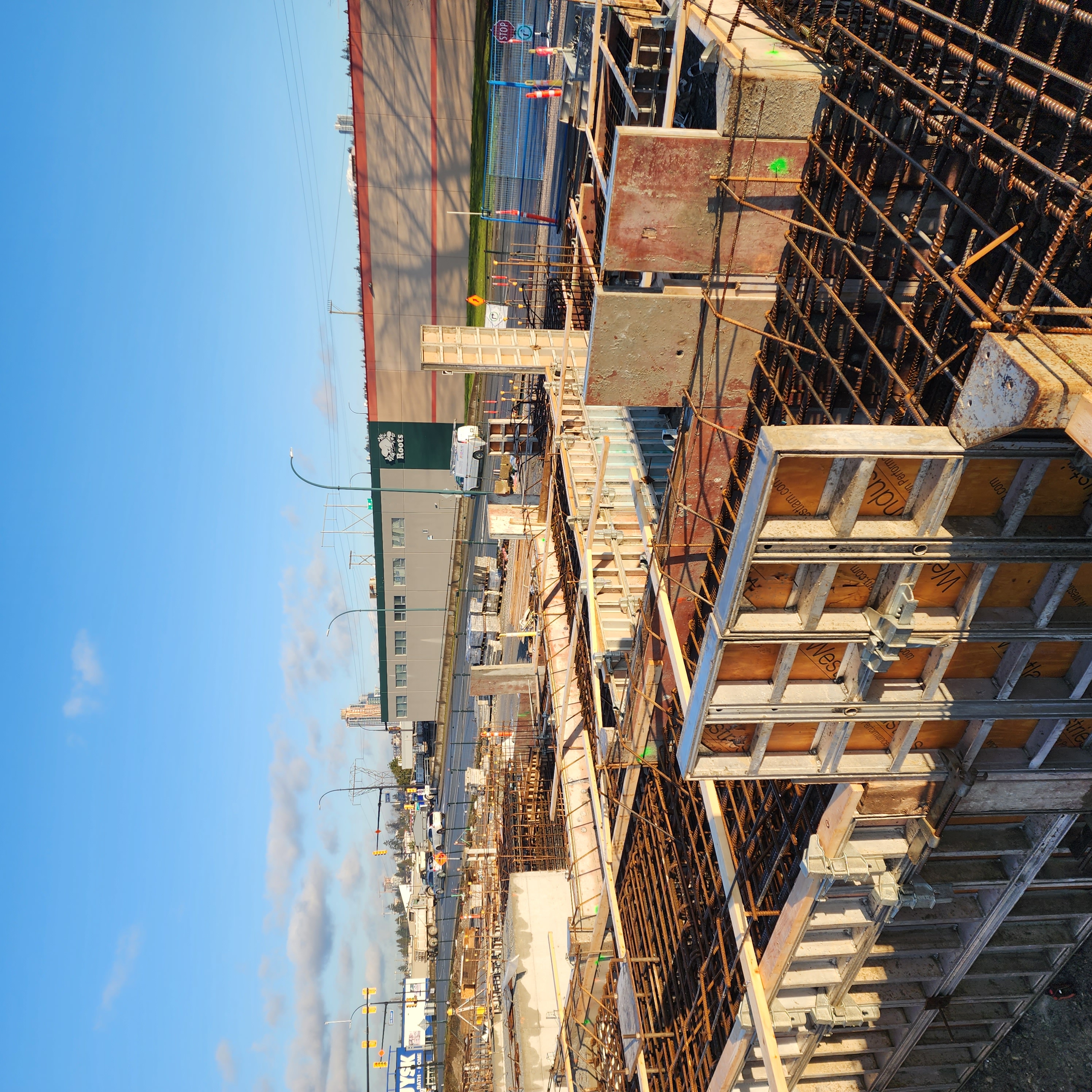
Professional concrete forming services typically include layout review, formwork planning, material selection, site preparation coordination, form installation, bracing, alignment checks, and readiness for placing concrete. Depending on the project, the scope may also include block-outs, recesses, anchor locations, sleeves, and other details that have to be built into the formwork before concrete is placed.
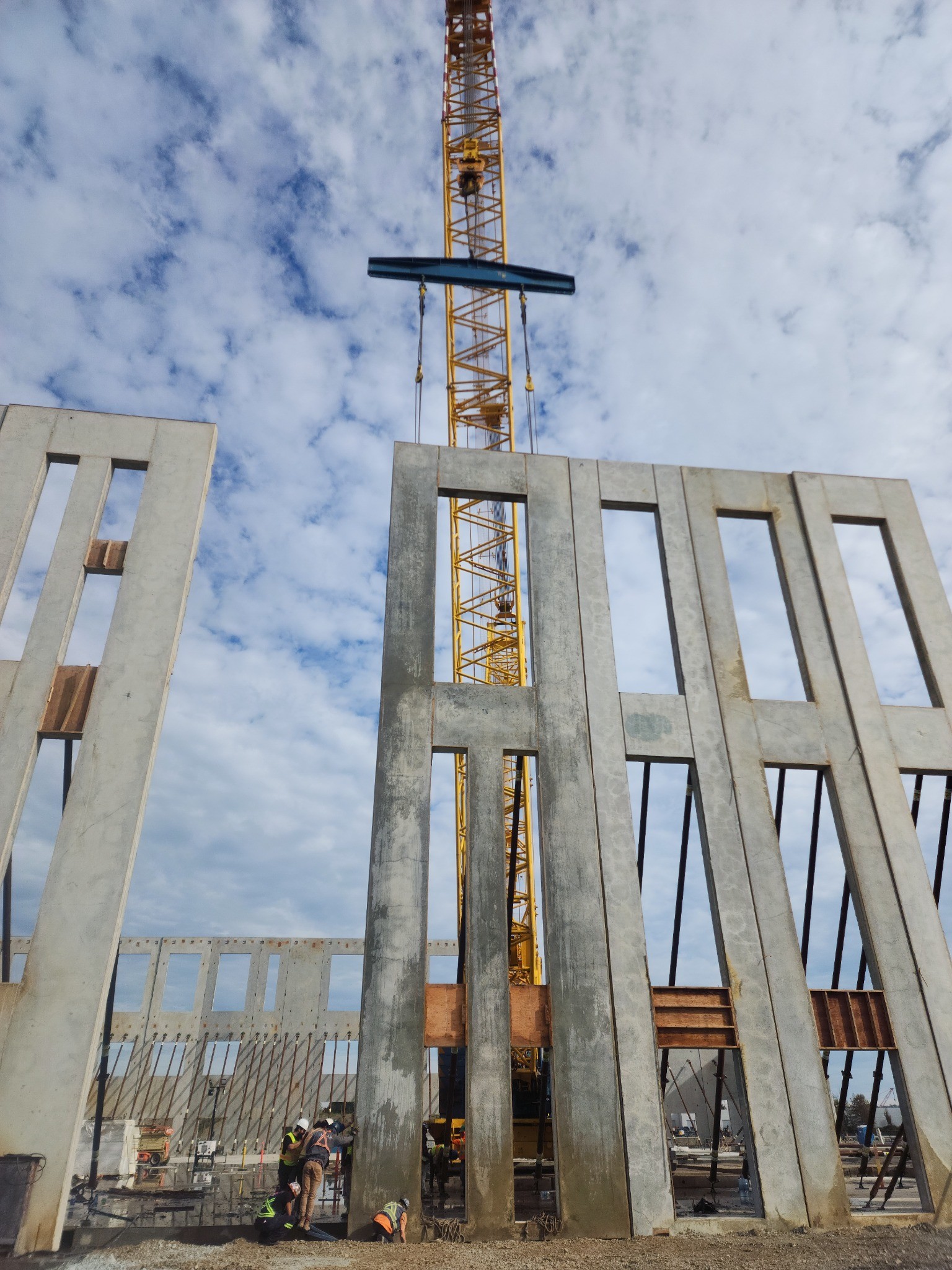
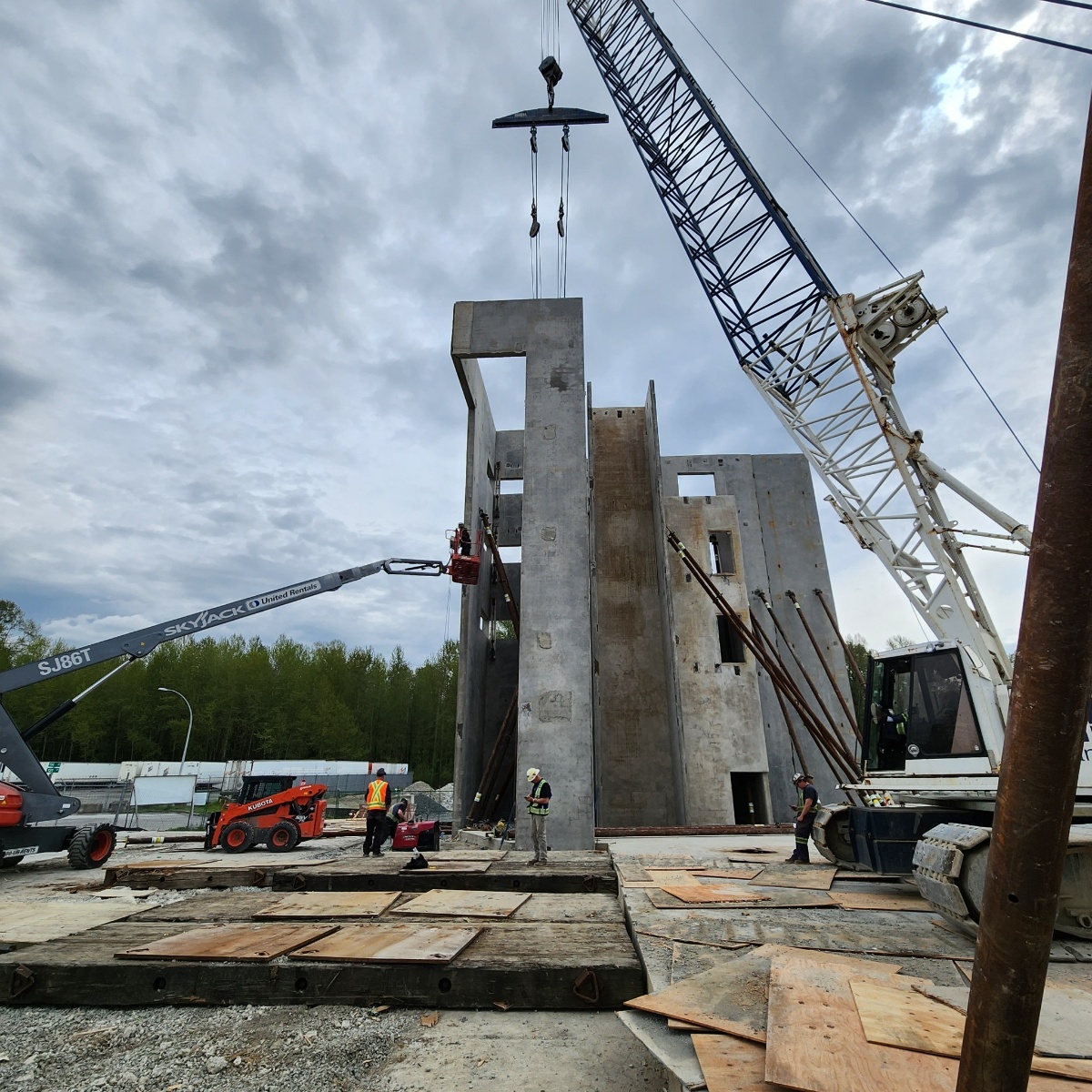
This work applies across residential, commercial, and industrial construction. In a residential setting, it may involve footings, foundation walls, suspended slabs, garage slabs, and retaining walls. On commercial and industrial projects, the scope often expands to columns, elevator cores, grade beams, equipment pads, structural walls, and larger slab systems where tighter sequencing and heavier loads increase the demands on the forming crew.
The formwork itself is temporary, but its effect is permanent. Once concrete cures, every decision made during the forming phase becomes part of the structure.
Why precision in concrete forming services matters
Good formwork controls more than shape. It affects structural performance, finish quality, labor efficiency, and schedule reliability.
If forms are set incorrectly, even by a small amount, the impact can spread quickly. Framing crews may have to adjust to out-of-square walls. Steel installers may run into conflicts with anchor placement. Waterproofing details may no longer align cleanly with the substrate. In industrial environments, dimensional accuracy becomes even more critical because equipment interfaces, load paths, and clearances often leave less room for field fixes.
This is where specialized crews bring value. A contractor focused on concrete forming understands how layout, bracing, ties, elevations, and sequencing work together. They are not treating formwork as a basic setup task. They are treating it as a structural operation that needs control from the first line to the final check.
Concrete forming for foundations, walls, columns, and slabs
Each structural element brings different demands, and that is why formwork planning should never be treated as one-size-fits-all.
Foundations
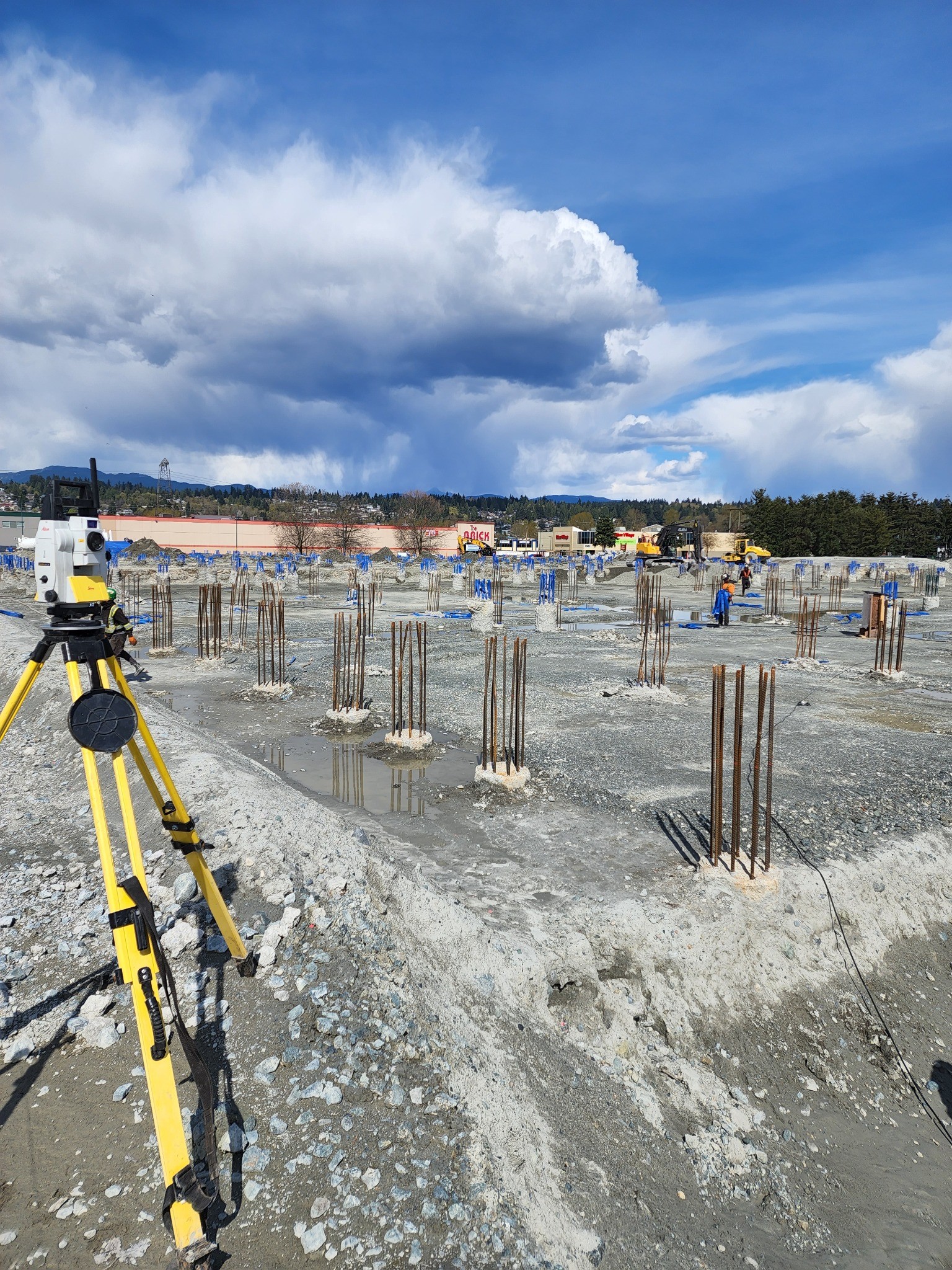
Foundation forming starts with accurate layout and elevation control. The work has to account for site conditions, bearing elevations, step details, wall heights, openings, and any coordination with drainage or waterproofing systems. On residential projects, clean and consistent foundation dimensions help every trade that follows. On larger builds, foundations often carry more complex loading and interface requirements, which makes precision even more important.
Walls
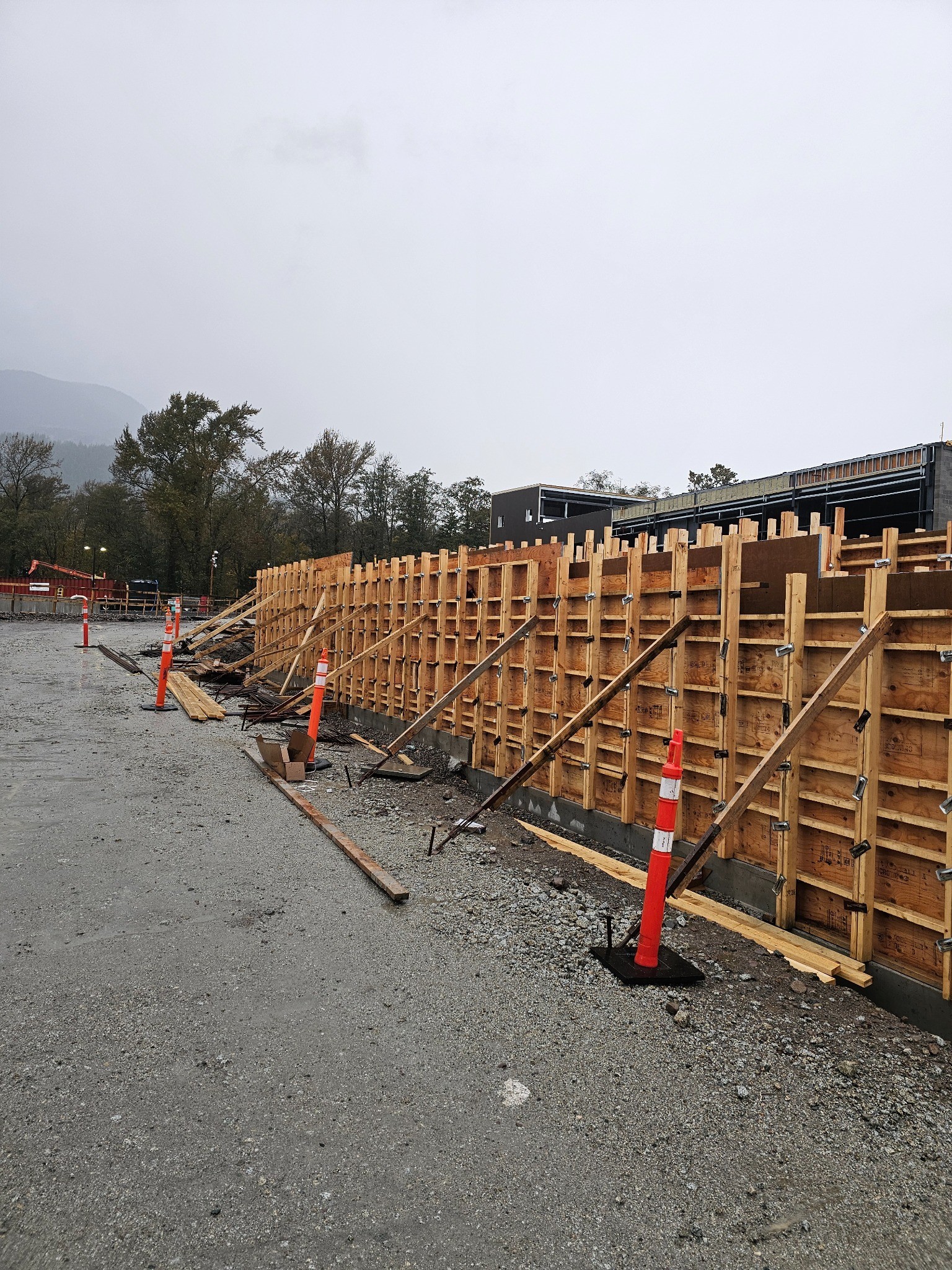
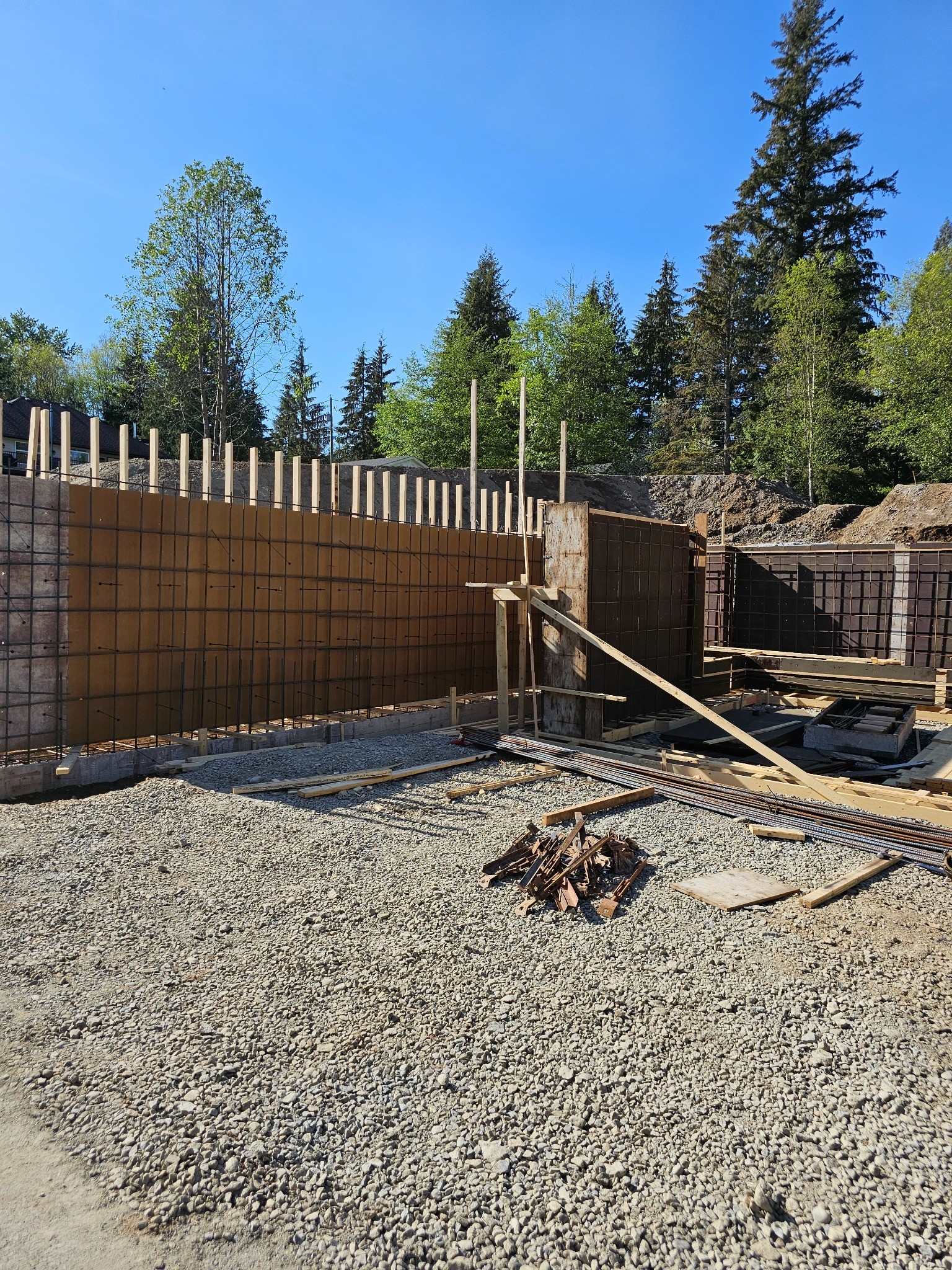
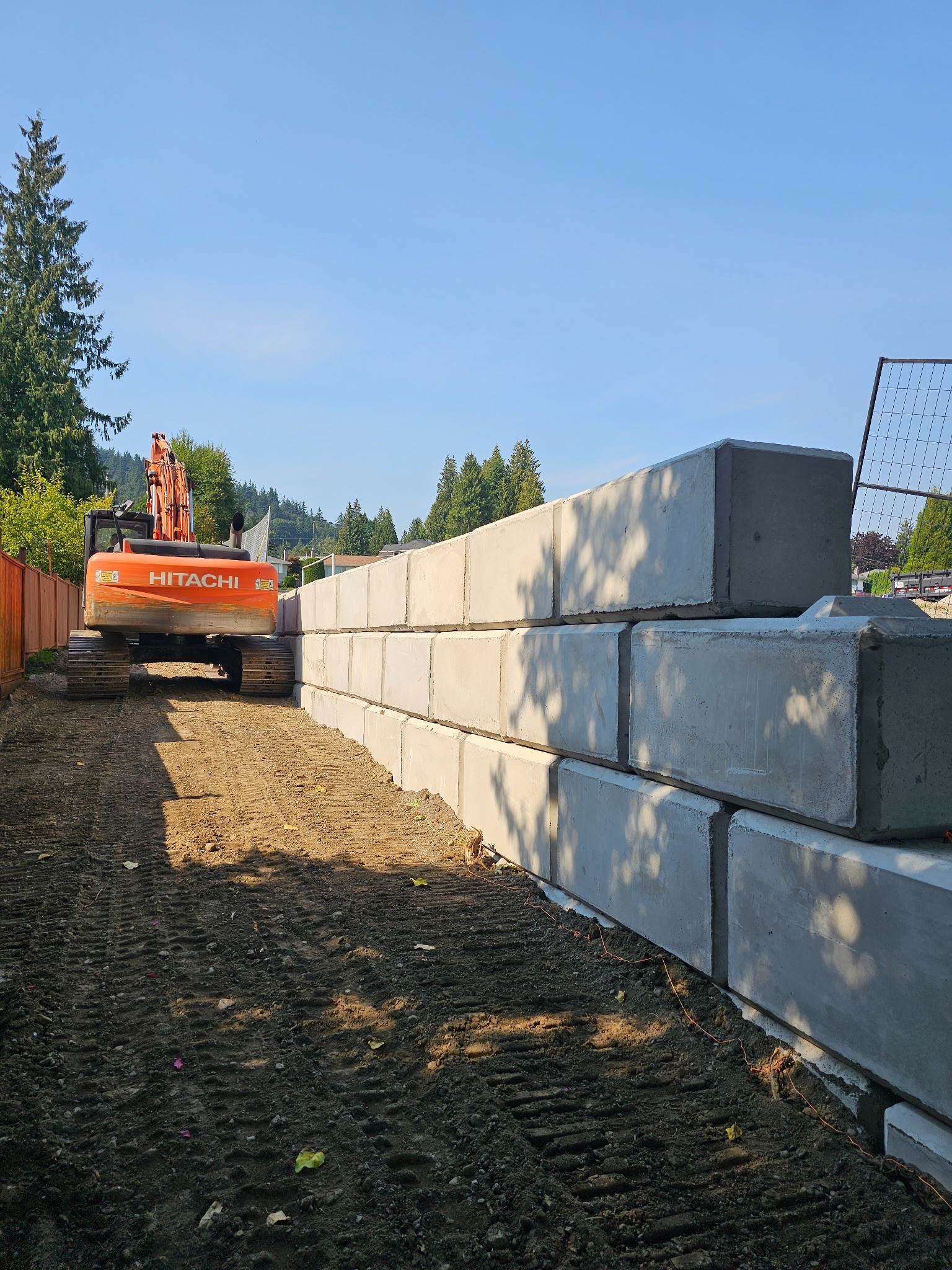
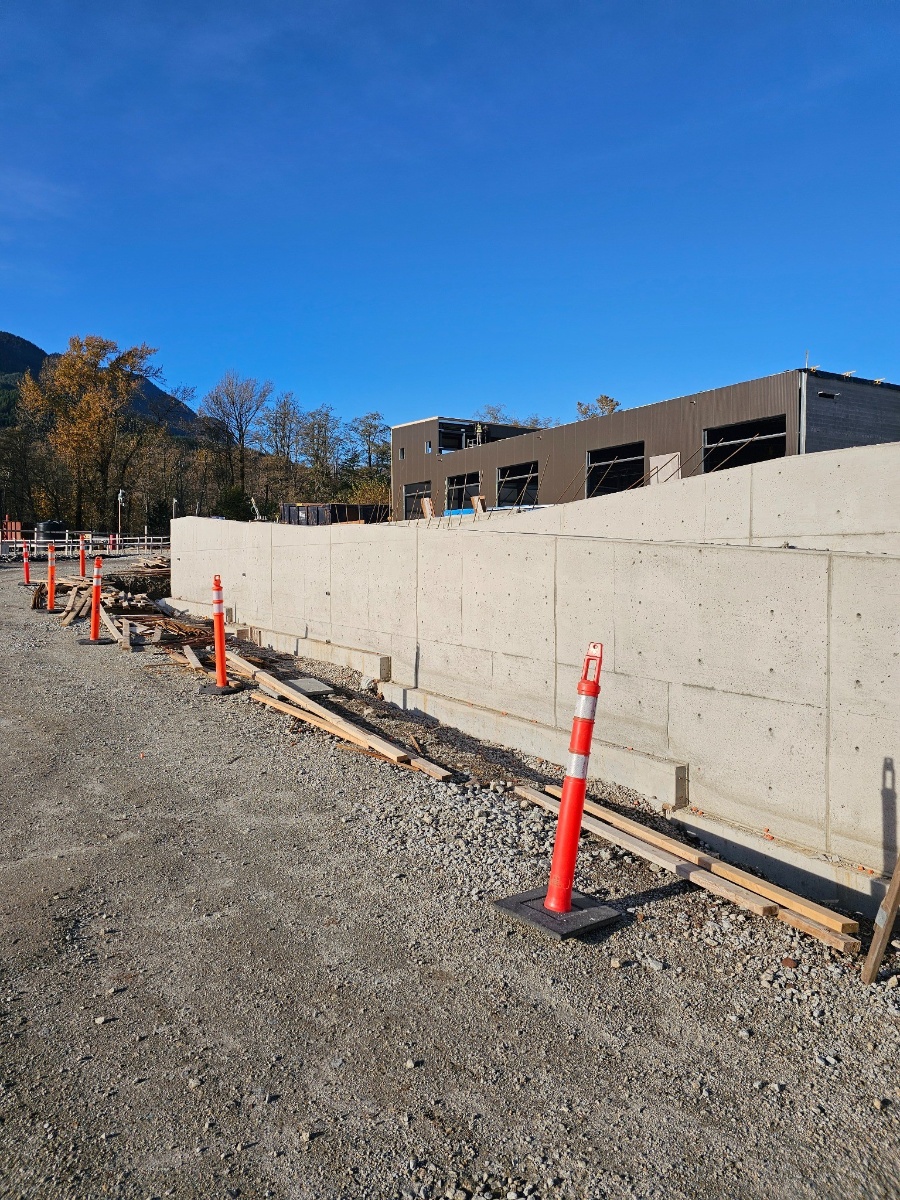
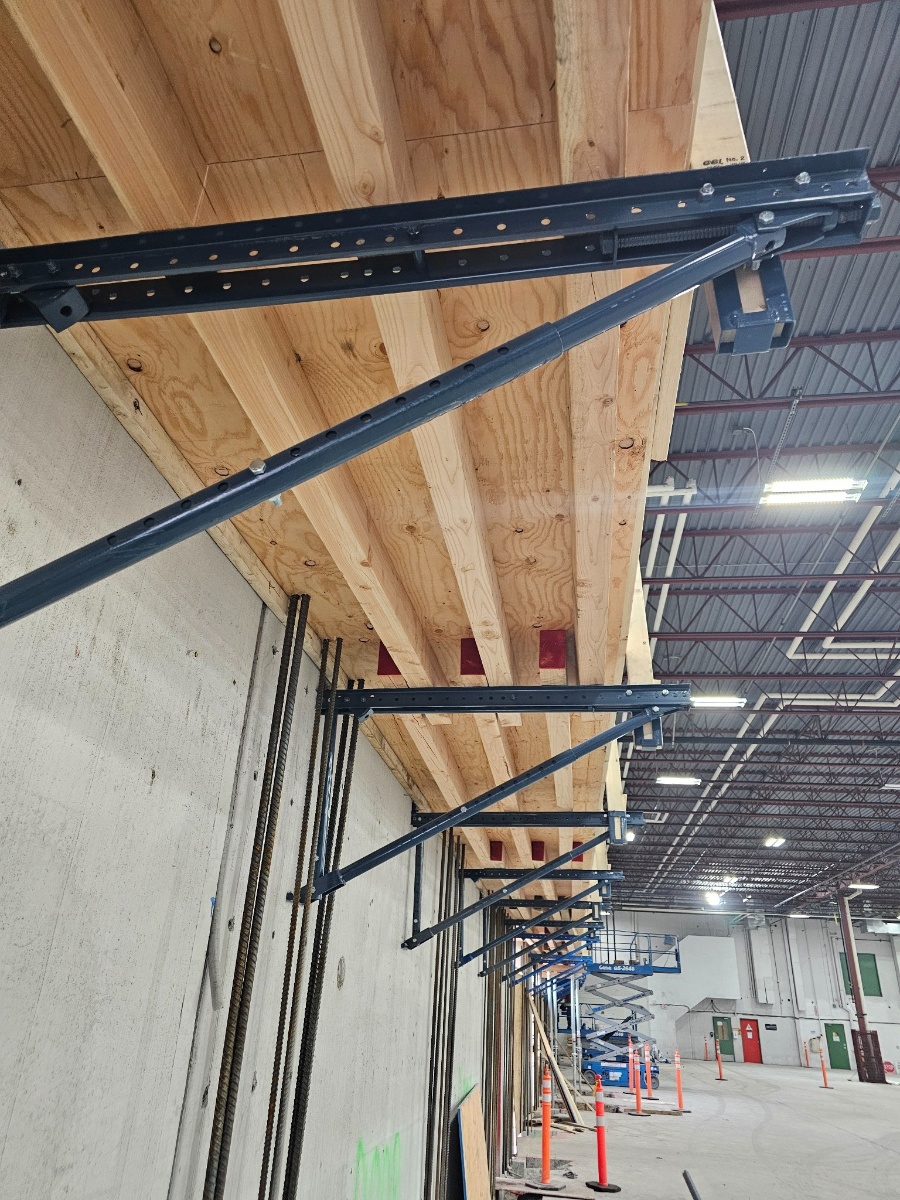
Concrete wall forming depends heavily on alignment, plumb, tie spacing, and bracing. Retaining walls, basement walls, and structural walls all need formwork that can resist pour pressure while maintaining position. Taller walls or walls with architectural exposure usually require closer attention to joint layout, surface consistency, and pour sequencing.
Columns
Column forms are less forgiving because errors are highly visible and can affect beam or slab connections above. Column location, size, vertical alignment, and corner quality all matter. On commercial and industrial work, those tolerances often need to be tighter because the columns are part of a larger structural system with fixed connection points.
Slabs
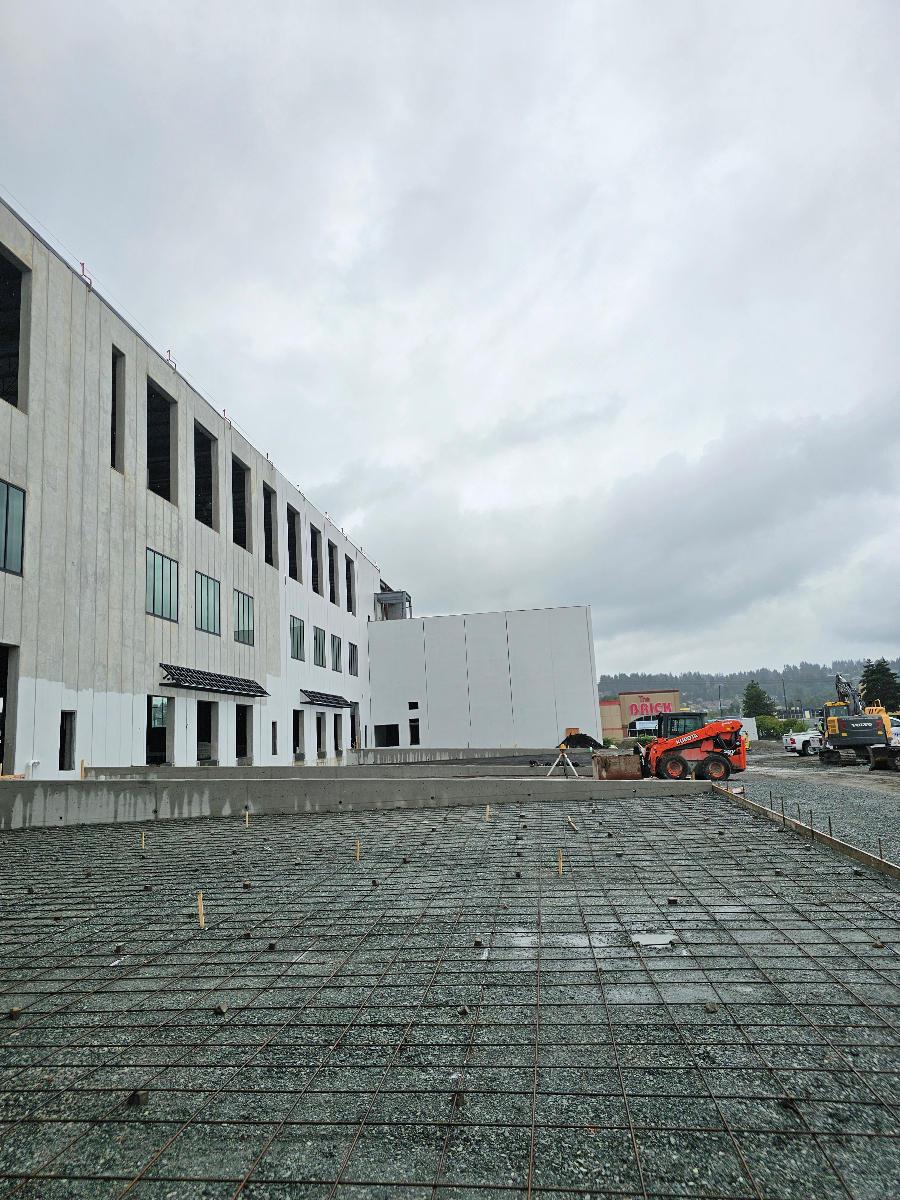
Slab forming can range from simple grade-supported work to suspended structural systems with much more demanding shoring and layout requirements. Flatness, levelness, edge control, penetrations, and construction joints all need to be addressed before placement. If the slab supports equipment, storage systems, or finished occupied space, the consequences of poor preparation can be significant.
The difference between basic setup and specialist formwork
Any crew can assemble forms. Not every crew can manage the details that keep a project on track.
Specialist forming contractors bring a trade-specific mindset to the work. They understand pour pressure, material behavior, sequencing with reinforcing steel, access constraints, and the need to coordinate with structural drawings rather than improvise in the field. They also know when a project requires more planning up front because the cost of correction later will be far higher.
That distinction matters for builders, developers, and property owners who want predictability. Formwork is one of those scopes where the cheapest number can become the most expensive result if execution is inconsistent.
What clients should look for in a concrete forming contractor
The first thing to look for is scope clarity. A capable contractor should be able to explain what is included, what assumptions are being made, and what project information is still needed before work begins. Vague pricing and vague scope usually lead to field disputes.
The second is trade discipline. Concrete forming requires accurate measurements, clean setup practices, and crews that work to plan. A dependable contractor should have a clear process for layout verification, alignment checks, bracing, and coordination before the pour.
The third is experience that matches the project type. Residential foundation work, commercial wall systems, and industrial structural forming are related, but they are not identical. The right fit depends on complexity, scale, and tolerance demands.
Finally, look at communication. Good formwork contractors identify issues early. If a detail in the drawings creates a conflict, or site conditions differ from the expected layout, that needs to be raised before the forms are locked in place.
Common issues that strong formwork helps prevent
When concrete forming is done well, the result is often quiet. Problems do not show up, so the value can be easy to underestimate. In practice, strong formwork helps reduce several common project issues.
It lowers the risk of dimensional errors that affect framing, steel, and finishing trades. It helps control surface irregularities caused by poor alignment or movement during the pour. It supports better embed and opening placement, which is especially important when mechanical and electrical systems depend on precise locations. It also reduces rework, and that matters because concrete correction is rarely simple or inexpensive.
That said, perfect conditions do not exist on every site. Weather, access limitations, late design changes, and sequencing pressure can all complicate execution. A good forming contractor does not ignore those realities. They plan around them and adjust methods where needed without losing control of the basics.
Schedule, safety, and coordination on active job sites
Concrete forming affects schedule in two ways. It has to be completed on time, and it has to be completed correctly enough that the pour can proceed without delay. Rushed formwork that fails inspection or needs last-minute adjustment is not helping the schedule.
This is why coordination matters. Forming crews need current drawings, clear access, and alignment with reinforcing steel, pump access, and pour timing. On active commercial and industrial sites, safety and staging become part of the execution plan as well. Formwork has to support the intended loads, and the site has to be organized so the work can proceed without creating unnecessary risk.
Professional contractors understand that reliability is not just showing up. It is delivering a formwork package that is ready when the project needs it and stable when the concrete arrives.
Choosing concrete forming services with long-term value in mind
The best decision is not always the fastest quote or the lowest number. It is the contractor who understands the structure, builds to the drawings, and manages the details that protect the pour and every phase after it.
For homeowners, that may mean a foundation built accurately enough that the rest of the build starts clean. For builders and developers, it often means fewer corrections, better sequencing, and less friction between trades. For industrial project managers, it means formwork that respects structural tolerances, operating demands, and schedule pressure.
At Keystone Construction, the focus is straightforward: precise concrete forming, dependable execution, and workmanship that supports the full structure rather than just the day of the pour.
If you are evaluating concrete forming services, look past the temporary nature of the forms and pay attention to what they control. In concrete work, the early setup is where long-term quality starts.